U.S. Lawmakers Advance 100% Tariff Bill Targeting India and China as Black Sea Risks Raise Fresh Concerns
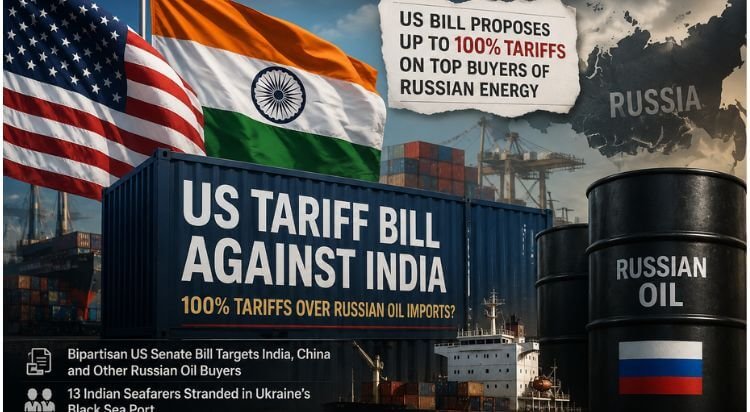
The United States is considering a new sanctions proposal that could significantly affect trade with some of the world’s largest buyers of Russian energy, including India and China. A bipartisan bill currently moving through the U.S. Senate would authorize tariffs of up to 100% on imports from countries that continue purchasing Russian oil and other energy products if certain conditions are met.
The proposal comes as India continues to maintain its long-standing policy of strategic autonomy, balancing close ties with the United States while preserving its energy and defense relationship with Russia.
At the same time, a separate humanitarian issue has emerged in the Black Sea, where 13 Indian seafarers are reportedly stranded aboard a cargo vessel at a Ukrainian port amid continuing Russian missile and drone attacks.
Although the legislation has not yet become law, both developments have drawn international attention and could influence India’s diplomatic and economic engagement with major global powers.
U.S. Senate Pushes Forward New Russia Sanctions Bill
The proposed legislation—commonly referred to as the Lindsey O. Graham Sanctioning Russia and Iran Act and sponsored by Senator Richard Blumenthal following the initiative originally championed by the late Senator Lindsey Graham—is designed to increase economic pressure on countries that continue purchasing Russian energy.
According to reports, an earlier version of the proposal called for tariffs of up to 500%. Lawmakers have since revised the measure, reducing the proposed maximum tariff to 100% while retaining its focus on countries that continue importing Russian oil.
The proposal is aimed at reducing Russia’s energy revenues, which Western governments argue help finance Moscow’s military operations in Ukraine.
If enacted, the legislation could affect several major buyers of Russian energy, including India, China, Slovakia, Hungary, and Azerbaijan.
Why Is India Included?
India has emerged as one of the largest importers of discounted Russian crude oil since the Russia-Ukraine war disrupted global energy markets.
Indian officials have consistently defended these purchases, saying the country’s energy policy is guided by national interest, energy security, and the need to ensure affordable fuel supplies for its population and industries.
New Delhi has also maintained that its foreign policy decisions are independent and not directed by pressure from any single country or geopolitical bloc.
Strategic Partnership Meets Policy Differences
The proposed tariff legislation highlights the complex nature of India-U.S. relations.
President Donald Trump has previously described India as a “trusted ally” and has repeatedly emphasized the importance of cooperation between the two countries in areas such as regional security, trade, and the Indo-Pacific.
At the same time, several U.S. lawmakers have argued that countries continuing to purchase Russian energy should face stronger economic consequences regardless of their strategic relationship with Washington.
The differing positions demonstrate that while India and the United States have expanded cooperation in recent years, differences remain over Russia and the ongoing war in Ukraine.
Possible Impact on India-U.S. Trade
If the legislation eventually becomes law and tariffs are imposed, Indian exports to the United States could face higher costs, potentially affecting the competitiveness of several industries.
Sectors that could be impacted include:
- Pharmaceuticals and generic medicines
- Engineering goods
- Chemicals
- Auto components
- Textiles
- Manufactured products
The United States remains one of India’s largest export markets, making any substantial tariff increase an important issue for businesses and policymakers.
The overall economic impact would ultimately depend on the final version of the legislation, the products covered, and whether exemptions are included.
Indian Seafarers Stranded in Ukraine’s Black Sea Region
Alongside trade concerns, another issue has drawn attention to the human cost of the Russia-Ukraine conflict.
According to the Forward Seamen’s Union of India (FSUI) and the Embassy of Ukraine in India, 13 Indian crew members are stranded aboard the cargo vessel MV AMIR1, which is currently located at the Port of Chornomorsk, near Odesa, Ukraine.
The vessel is reportedly unable to leave because of ongoing missile and drone attacks in the region.
Ukrainian officials have also stated that previous attacks in the Black Sea resulted in the deaths and injuries of Indian seafarers serving aboard commercial cargo ships, raising fresh concerns about maritime safety in the conflict zone.
Ukraine Seeks Greater Cooperation
The Ukrainian Embassy in India has urged closer coordination to help protect Indian nationals working in the Black Sea region.
According to Ukrainian officials, civilian cargo vessels continue to face risks from military operations, and additional diplomatic engagement is needed to ensure the safety of international crews.
The developments have placed renewed attention on the security of Indian merchant sailors serving aboard commercial vessels operating near active conflict areas.
India’s Diplomatic Balancing Act
India has consistently followed a policy of strategic autonomy, maintaining diplomatic engagement with both Russia and Western nations.
While New Delhi has strengthened cooperation with the United States across defense, technology, and trade, it has also continued purchasing Russian crude oil and maintaining long-standing strategic ties with Moscow.
India has repeatedly called for dialogue and a peaceful resolution to the conflict while avoiding direct participation in Western sanctions against Russia.
This approach has allowed India to preserve relationships with multiple global partners but has also exposed it to increasing geopolitical pressure.
What Happens Next?
The proposed sanctions legislation must complete the U.S. legislative process before it can become law.
If approved, the final implementation would depend on the legislation’s wording, presidential approval, and subsequent policy decisions by the U.S. administration.
Meanwhile, the safety of Indian seafarers in the Black Sea remains an immediate humanitarian concern, with diplomatic efforts expected to continue as the conflict persists.
Key Takeaways
- A bipartisan U.S. Senate proposal would authorize tariffs of up to 100% on countries purchasing Russian energy.
- The proposal evolved from an earlier version that suggested tariffs as high as 500%.
- India is among the countries that could be affected because of its continued imports of Russian crude oil.
- 13 Indian seafarers are reportedly stranded aboard MV AMIR1 at Chornomorsk Port near Odesa amid ongoing attacks.
- India continues to pursue strategic autonomy while balancing its partnerships with both the United States and Russia.
Frequently Asked Questions
What is the proposed U.S. sanctions bill?
It is a bipartisan proposal in the U.S. Senate, commonly referred to as the Lindsey O. Graham Sanctioning Russia and Iran Act, sponsored by Senator Richard Blumenthal after being initiated by the late Senator Lindsey Graham. It proposes tariffs of up to 100% on countries that continue purchasing Russian energy.
Why is India affected?
India has significantly increased imports of discounted Russian crude oil since 2022. U.S. lawmakers argue that continued purchases help generate revenue for Russia.
Has the bill become law?
No. The proposal is still moving through the U.S. legislative process and has not yet been enacted.
Which industries could be impacted?
Potentially affected sectors include pharmaceuticals, engineering goods, chemicals, auto components, textiles, and other manufactured exports to the United States.
Why are Indian seafarers in the news?
According to the Forward Seamen’s Union of India and Ukrainian officials, 13 Indian crew members remain stranded aboard MV AMIR1 at the Port of Chornomorsk due to ongoing military activity in the Black Sea.
What is India’s position?
India maintains that its energy purchases are based on national interest and energy security while continuing to advocate dialogue and peaceful resolution of the Russia-Ukraine conflict.
Conclusion
The proposed U.S. tariff legislation and the situation involving Indian seafarers highlight two very different but interconnected challenges facing India. On one hand, New Delhi is navigating increasing economic pressure from Washington over its continued purchase of Russian energy. On the other, the conflict in the Black Sea is directly affecting the safety of Indian citizens working in international shipping.
As the sanctions bill moves through the U.S. legislative process and the war in Ukraine continues, India will need to balance its economic interests, diplomatic relationships, and responsibility to protect its nationals abroad. The coming weeks will be important in determining how these developments shape India’s ties with both the United States and Russia.