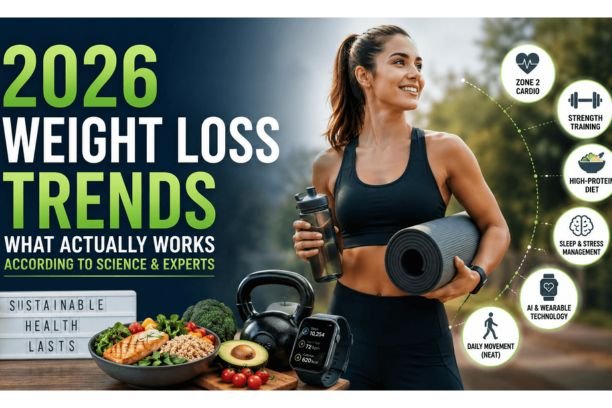
2026 Weight Loss Trends: What Actually Works According to Science & Experts
Weight loss in 2026 looks very different from the past decade. The era of extreme dieting, detox teas, and “lose 10 kg in 10 days” challenges is fading fast. In its place, a more sustainable, science-driven approach has emerged—focused on metabolic health, body composition, and long-term consistency.
Across global search trends, one clear shift stands out:
People are no longer asking how to lose weight fast—they are asking how to lose weight properly and permanently.
This article breaks down the most important 2026 weight loss trends that are actually supported by science, fitness professionals, and modern clinical research.
1. The Biggest Shift: From Fast Fat Loss to Sustainable Health
The most important transformation in 2026 is not a workout trend—it’s a mindset shift.
For years, weight loss culture revolved around aggressive calorie restriction and rapid results. But research and real-world outcomes consistently show that these methods often lead to:
- metabolic slowdown
- muscle loss
- rebound weight gain
- burnout and diet fatigue
Now, the focus has moved toward long-term body composition improvement, not just weight reduction.
Instead of asking “How fast can I lose weight?”, people are asking:
- How do I keep it off?
- How do I maintain energy?
- How do I build a healthier body for life?
This shift is shaping every major trend in 2026.
2. Zone 2 Cardio: The Most Important Fat Loss Trend of 2026
One of the most scientifically supported trends is Zone 2 cardio, popularized by longevity researchers like Dr. Peter Attia.
Zone 2 refers to low-intensity exercise where your body primarily uses fat as fuel. Examples include:
- brisk walking
- light jogging
- cycling at a steady pace
- Incline treadmill walking
Why it works
Zone 2 training improves mitochondrial efficiency—the body’s ability to burn fat for energy. Unlike high-intensity workouts, it is:
- sustainable daily
- easy to recover from
- effective for long-term metabolic health
Fitness experts now view Zone 2 as a foundation of health, not just a fat-loss tool.
3. Strength Training: The Foundation of Modern Fat Loss
If Zone 2 is the foundation of endurance, strength training is the foundation of fat loss in 2026.
According to the American College of Sports Medicine (ACSM), resistance training is essential for maintaining lean muscle during weight loss.
Why it matters more than ever:
- Muscle increases resting metabolism
- Prevents fat regain after dieting
- Improves insulin sensitivity
- Shapes the body aesthetically
Even 2–4 sessions per week can significantly improve body composition.
In 2026, fitness professionals emphasize:
You don’t just want to lose weight—you want to lose fat while keeping muscle.
4. Modern Nutrition: High-Protein, Whole Foods, and Flexibility
Nutrition trends in 2026 have evolved away from extreme restrictions and toward balanced, sustainable eating patterns.
Instead of rigid diet rules, the focus is now on three principles:
1. High-Protein Intake
Protein plays a central role in fat loss by:
- increasing satiety (reducing hunger)
- preserving muscle mass
- boosting thermic effect (calorie burning during digestion)
Common sources include chicken, fish, eggs, tofu, and legumes.
2. Whole Food Focus
Ultra-processed foods are being replaced with:
- fruits and vegetables
- whole grains
- minimally processed proteins
3. Flexibility Over Restriction
Unlike older diets, modern approaches allow flexibility, making long-term adherence realistic.
Together, this approach improves metabolic health without the psychological stress of strict dieting.
5. Intermittent Fasting: Still Relevant, But More Flexible
Intermittent fasting remains popular in 2026, but its application has changed.
Instead of strict protocols like OMAD or extreme fasting windows, most people now use:
- 12–14-hour overnight fasting
- occasional skipped meals
- flexible eating windows based on lifestyle
The scientific consensus today is clear:
Fasting is a tool for calorie control, not a standalone fat loss solution.
6. NEAT: The Most Underrated Fat Loss Factor
One of the most important but overlooked concepts is NEAT (Non-Exercise Activity Thermogenesis)—all calories burned outside formal exercise.
This includes:
- walking
- standing
- household work
- daily movement
Research shows NEAT can contribute more to total daily calorie burn than structured workouts for many individuals.
2026 trend:
- 8,000–12,000 daily steps is becoming a baseline goal
- People are actively reducing sedentary time
- Walking meetings and active breaks are increasing
Simply put:
Fat loss is becoming a “throughout-the-day” process, not just a gym activity.
7. Sleep and Stress: The Hidden Fat Loss Drivers
Sleep and stress management are now recognized as core pillars of weight loss.
Poor sleep disrupts:
- hunger hormones (ghrelin and leptin)
- glucose regulation
- recovery processes
Chronic stress increases cortisol, which is linked to:
- abdominal fat storage
- cravings for high-calorie foods
- Reduced motivation to exercise
In 2026, fitness plans increasingly include:
- sleep optimization strategies
- mindfulness practices
- stress reduction routines
Health is no longer just physical—it is hormonal and neurological.
8. AI-Powered Fitness and Wearable Personalization
Technology is transforming how people approach weight loss.
AI fitness platforms now track:
- calorie intake
- workout performance
- sleep quality
- recovery levels
These systems create adaptive, personalized plans instead of generic routines.
Wearables like smartwatches and health rings help users:
- Monitor heart rate zones
- track daily activity
- optimize recovery
This has shifted weight loss from guesswork to data-driven decision-making.
9. Home Workouts and No-Gym Training Growth
Home fitness continues to rise due to convenience and accessibility.
Popular methods include:
- bodyweight training
- resistance bands
- dumbbell routines
- short HIIT sessions (15–20 minutes)
This trend reflects modern lifestyle realities:
- busy schedules
- remote work culture
- rising gym costs
The core idea in 2026 is simple:
Consistency matters more than location.
10. Medical Weight Loss (GLP-1 Era Requires Lifestyle Support)
The rise of GLP-1 medications (such as semaglutide-based treatments) is one of the most discussed developments in modern weight management.
These medications help regulate appetite and support significant weight loss, especially in clinical obesity cases. However, medical experts emphasize they are not standalone solutions.
A key concern is lean muscle loss during rapid weight reduction.
Because of this, healthcare professionals increasingly recommend:
- high-protein diets
- structured strength training
- lifestyle-based exercise routines
This ensures patients lose fat while preserving metabolic health.
In 2026, the consensus is clear:
Medication supports weight loss, but lifestyle determines body composition.
11. What’s Being Phased Out in 2026
As modern science advances, several outdated methods are being rejected:
- crash diets
- detox teas and “cleansing” products
- extreme fasting challenges
- overtraining without recovery
- unrealistic transformation promises
These approaches consistently fail long-term and often harm metabolic health.
Conclusion: What Actually Works in 2026
The future of weight loss is no longer about extremes—it is about systems.
The most effective approach in 2026 combines:
- Strength training (muscle preservation and metabolism)
- Zone 2 cardio (fat oxidation and heart health)
- High-protein, whole-food nutrition (satiety and recovery)
- NEAT movement (daily calorie burn)
- Sleep and stress management (hormonal balance)
- Technology-driven personalization (AI + wearables)
There is no single magic solution.
Instead, success comes from building a sustainable lifestyle that supports both health and consistency.
In the end, the biggest trend of 2026 is not a workout or diet—it is the return to balance, science, and long-term thinking.