Saudi Arabia Joins U.S. Military Strikes on Iran-Backed Militias in Iraq, Marking a Major Escalation in Middle East Tensions
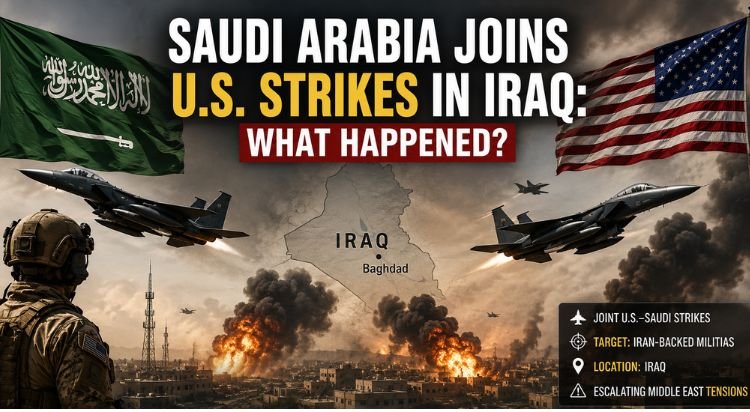
The Middle East has entered another dangerous phase after Saudi Arabia reportedly joined the United States in military strikes targeting Iran-backed militias in Iraq. The operation represents one of the most significant military actions involving Saudi forces in recent years and has heightened concerns that the regional conflict could expand further.
The strikes came after a series of escalating attacks across the region, including drone strikes against Saudi energy infrastructure and attacks targeting U.S. military personnel stationed in Iraq and neighboring countries. American and Saudi officials described the operation as a defensive measure intended to deter future attacks and reduce the operational capabilities of Iran-backed armed groups.
However, the military action has also sparked sharp criticism from Iraq, while Iran-aligned militias have vowed retaliation. Analysts warn that the latest developments could reshape regional alliances and increase the risk of a broader confrontation involving several Middle Eastern nations.
What Happened?
According to multiple international news reports, the United States and Saudi Arabia coordinated airstrikes against facilities used by Iran-backed militias operating inside Iraq.
The targets reportedly included weapons depots, logistics hubs, drone launch sites, and command centers linked to armed groups that Western officials say receive support from Iran’s Islamic Revolutionary Guard Corps (IRGC).
The operation followed weeks of rising tensions in which Saudi Arabia accused Iran-backed militias of launching drone attacks against oil facilities and other strategic infrastructure. The United States has also blamed these groups for repeated attacks on American military installations across Iraq and Syria.
While officials have not disclosed the full extent of the damage, early reports indicate that several militia facilities were destroyed.
Why Iraq Has Become the Center of Regional Tensions
Iraq occupies one of the most strategically important positions in the Middle East.
The country hosts thousands of Iraqi security personnel, several powerful militia organizations, and U.S. military advisers. At the same time, Iraq maintains close political and economic ties with neighboring Iran.
This complicated security environment has made Iraq one of the primary arenas for competition between Washington and Tehran.
Many Iran-backed armed groups operate inside Iraq under the umbrella of the Popular Mobilization Forces (PMF). While some PMF units officially answer to the Iraqi government, others maintain strong relationships with Iran and operate with considerable independence.
For years, these groups have been accused by the United States of carrying out rocket attacks, drone strikes, and other operations against American personnel stationed in Iraq.
Because of this, Iraq has repeatedly become the location for military exchanges between the United States and Iran-backed groups, even though Baghdad has consistently called for restraint from all sides.
Saudi Arabia’s Military Role Is Changing
For decades, Saudi Arabia largely relied on diplomacy, regional partnerships, and defensive military operations rather than direct cross-border intervention against Iran-backed groups.
The latest operation suggests Riyadh may now be adopting a more assertive regional security strategy.
Saudi Arabia has spent hundreds of billions of dollars modernizing its armed forces over the past two decades.
Its military modernization program includes purchases of advanced fighter aircraft, missile defense systems, surveillance technology, precision-guided weapons, and electronic warfare capabilities.
Security analysts believe these investments are intended to strengthen Saudi Arabia’s ability to defend its territory while also projecting military power across the region if necessary.
The latest operation could represent one of the clearest demonstrations yet of that evolving strategy.
Saudi Arabia’s Air Force: One of the Region’s Most Advanced
Although Saudi Arabia is often associated with its oil wealth, the kingdom also operates one of the Middle East’s largest and most technologically advanced air forces.
Some of its most important military assets include:
| Capability | Details |
| Main Fighter Jet | F-15SA Strike Eagle |
| Additional Fighters | Eurofighter Typhoon |
| Air Defense | Patriot missile systems and advanced radar networks |
| Combat Aircraft | Hundreds of modern aircraft across multiple squadrons |
| Defense Spending | Among the world’s highest annual military budgets |
The Royal Saudi Air Force has received extensive training from Western allies and continues to modernize through cooperation with the United States and European defense manufacturers.
However, despite possessing advanced equipment, Saudi Arabia has faced criticism over its military effectiveness during previous regional conflicts, particularly in Yemen.
The latest military operation is therefore being viewed as an important test of both Saudi capabilities and political willingness to engage more directly in regional security matters.
Why Iran-Backed Militias Matter
Iran has spent decades building relationships with allied armed groups across the Middle East.
These organizations form what many analysts call Iran’s “Axis of Resistance,” a network of partners that extends across several countries.
Major Iran-aligned groups operate in:
- Iraq
- Lebanon
- Syria
- Yemen
- Gaza
Iran argues that these organizations provide legitimate resistance against foreign military presence and Israeli actions in the region.
The United States, Saudi Arabia, and several Western governments, however, accuse these groups of destabilizing regional security through attacks on military bases, commercial shipping, and energy infrastructure.
The growing influence of these militias has become one of the central security challenges facing Gulf countries.
Iraq Condemns the Operation
The Iraqi government reacted strongly to the reported strikes.
Officials described the operation as a violation of Iraq’s sovereignty and warned that unilateral military actions by foreign powers could further destabilize the country.
Baghdad has repeatedly stated that it does not want Iraq to become a battlefield for wider regional conflicts between the United States and Iran.
Iraqi leaders continue to face the difficult challenge of balancing relations with Washington while maintaining political and economic ties with Tehran.
That balancing act has become increasingly complicated as regional tensions continue to rise.
Regional Security Concerns Continue to Grow
The latest military operation has significantly increased concerns among diplomats and security experts.
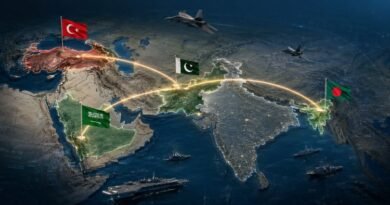
Several neighboring countries—including Jordan, Kuwait, Bahrain, the United Arab Emirates, and Qatar—are closely monitoring developments because any further escalation could directly affect regional stability.
Energy infrastructure, shipping routes, and military bases across the Gulf remain on heightened alert.
Although no government has publicly announced plans for broader military action, analysts caution that the possibility of retaliatory attacks cannot be ruled out.
As a result, international observers are calling for renewed diplomatic efforts to prevent the conflict from spreading further.
The Strait of Hormuz: Why the World Is Watching
Whenever tensions rise between Iran and its regional rivals, one location immediately comes into focus—the Strait of Hormuz.
This narrow waterway, located between Iran and Oman, is one of the world’s most strategically important maritime chokepoints. A substantial share of globally traded crude oil and liquefied natural gas (LNG) passes through the strait every day, making it critical to international energy markets.
Any disruption to shipping in the Strait of Hormuz can have immediate global consequences, including:
- Higher crude oil prices
- Increased shipping and insurance costs
- Supply chain disruptions
- Rising fuel prices for consumers
- Inflationary pressure on economies worldwide
Although the latest military operation took place in Iraq, analysts warn that a wider regional conflict could threaten maritime security in the Gulf. Even the possibility of disruptions often causes volatility in energy markets, as traders react to geopolitical uncertainty.
For countries heavily dependent on imported energy—including India, Japan, South Korea, and many European nations—the stability of this shipping route remains a major concern.
Oil Markets React to Rising Tensions
Global financial markets closely monitor geopolitical developments in the Middle East because the region remains one of the world’s largest producers and exporters of crude oil.
Following reports of the U.S.-Saudi military operation, oil prices moved higher amid fears that the conflict could spread beyond Iraq.
Energy analysts say that markets are reacting less to the strikes themselves and more to the possibility of retaliation that could affect oil production facilities, export terminals, or commercial shipping routes.
Saudi Arabia remains one of the world’s largest oil exporters, and any threat to its production or transportation infrastructure could influence global energy supplies.
Investors are also watching whether OPEC+ members adjust production strategies if instability continues.
International Reactions
The latest escalation has prompted responses from governments and international organizations around the world.
United States
American officials described the operation as a defensive action aimed at reducing the operational capabilities of armed groups responsible for repeated attacks on U.S. personnel and regional allies.
Washington has emphasized that its objective is to deter future attacks rather than widen the conflict.
Saudi Arabia
Saudi officials have maintained that protecting national security and critical infrastructure remains their highest priority.
The Kingdom has repeatedly stated that attacks on energy facilities and civilian infrastructure cannot go unanswered.
Iraq
Baghdad strongly criticized the operation, arguing that military action conducted without Iraqi approval undermines the country’s sovereignty.
Officials also expressed concern that continued foreign military operations could further destabilize Iraq.
Iran
Iran has rejected accusations that it directly controls every armed group operating in the region.
At the same time, Iranian leaders have warned that attacks on groups aligned with Tehran could have broader regional consequences.
Saudi Arabia vs. Iran: Comparing Military Capabilities
Although both countries are major regional powers, their military strategies differ significantly.
| Category | Saudi Arabia | Iran |
| Primary Strength | Advanced Air Force | Ballistic Missiles & Drone Program |
| Fighter Aircraft | F-15SA, Eurofighter Typhoon | F-14, MiG-29, Su-24 and newer acquisitions |
| Air Defense | Patriot and modern Western systems | Indigenous missile defense systems |
| Naval Focus | Gulf maritime security | Fast attack craft and asymmetric naval tactics |
| Defense Spending | Among the world’s highest | Lower overall budget but extensive domestic production |
Saudi Arabia has invested heavily in advanced Western military technology, while Iran has focused on developing domestic missile systems, drones, and asymmetric warfare capabilities.
This difference means that any direct confrontation would involve very different military doctrines rather than a simple comparison of equipment.
The Growing Importance of Regional Alliances
The latest operation also highlights the importance of military partnerships in the Middle East.
Saudi Arabia continues to strengthen defense cooperation with the United States and several Gulf partners.
Meanwhile, Iran maintains relationships with allied armed groups across Iraq, Syria, Lebanon, and Yemen.
These competing security networks have increasingly shaped regional conflicts over the past decade.
As a result, events occurring inside one country can quickly affect security conditions across multiple neighboring states.
Timeline of Recent Developments
Rising Regional Tensions
Drone and missile attacks against military and energy targets increase across the region.
Saudi Arabia Blames Iran-Backed Militias
Saudi officials accuse armed groups operating from Iraq of carrying out attacks against critical infrastructure.
Military Coordination
The United States and Saudi Arabia coordinate military planning in response to the growing threat.
Airstrikes in Iraq
Joint military strikes reportedly target facilities linked to Iran-backed militias.
Iraqi Response
Baghdad condemns the operation, describing it as a violation of national sovereignty.
Regional Alert
Neighboring countries increase security preparedness while monitoring developments closely.
What Could Happen Next?
Security analysts outline several possible scenarios.
1. Increased Diplomatic Efforts
Regional mediators could attempt to reduce tensions through renewed negotiations involving Gulf countries, Iraq, and Iran.
2. Additional Retaliatory Attacks
Iran-backed militias may launch further drone or rocket attacks against military bases or strategic infrastructure.
3. Expanded Military Operations
If attacks continue, coalition forces could conduct additional operations targeting militia facilities.
4. Pressure on Iraq
The Iraqi government may face increasing pressure to strengthen control over armed groups operating within its territory.
5. Continued Energy Market Volatility
Even without a broader war, uncertainty alone could continue influencing oil prices and international shipping costs.
Key Facts Readers Should Know
- Saudi Arabia’s reported participation represents one of its most significant recent military actions outside its borders.
- Iraq remains one of the most sensitive geopolitical flashpoints in the Middle East.
- Iran-backed militias continue to play a major role in regional security dynamics.
- Global energy markets remain highly sensitive to instability involving Gulf oil producers.
- Diplomatic efforts continue alongside military operations, although tensions remain elevated.
Frequently Asked Questions
Why did Saudi Arabia join the military operation?
According to official statements and international reporting, Saudi Arabia acted after repeated attacks targeting its energy infrastructure and security interests.
Why are Iran-backed militias operating in Iraq?
Many of these groups emerged during the fight against ISIS and later became influential political and military organizations. Some maintain close ties with Iran while also participating in Iraq’s domestic security framework.
Could this lead to a wider regional war?
Analysts say the risk has increased, but the outcome will largely depend on future military actions, diplomatic efforts, and the responses of regional governments.
How could this affect global oil prices?
Any disruption to oil production or shipping routes in the Gulf could increase global energy prices, affecting transportation, manufacturing, and consumer costs worldwide.
Why is Iraq so important in this conflict?
Iraq sits at the center of regional geopolitics, hosting U.S. forces while maintaining extensive political, economic, and religious ties with Iran. This makes it one of the most strategically important countries in the Middle East.
Conclusion
The reported joint military operation by the United States and Saudi Arabia against Iran-backed militias marks another significant turning point in an already volatile Middle East security environment.
While supporters argue that the strikes were intended to deter attacks and protect critical infrastructure, critics warn that additional military action risks deepening regional instability. Iraq’s condemnation of the operation, combined with warnings from Iran-aligned groups, underscores how fragile the situation remains.
Beyond the immediate military implications, the developments have drawn global attention because of their potential impact on energy markets, international shipping, and broader geopolitical stability. Governments, investors, and security analysts will be closely watching the coming days to see whether diplomatic efforts can contain the crisis or whether further escalation becomes unavoidable.
As events continue to unfold, verified information from official sources and reputable international news organizations will remain essential for understanding one of the most consequential security developments in the Middle East this year.