Cobra Stretch: How to Do It Correctly, Benefits, Muscles Worked & Mistakes to Avoid
The Cobra Stretch is one of the simplest and most effective stretches for improving back mobility, opening the chest, and relieving stiffness after long hours of sitting. Also known as Bhujangasana in yoga, this beginner-friendly movement combines a gentle backbend with a stretch through the abdomen and hip flexors.
When performed with proper form, the Cobra Stretch can strengthen the muscles supporting your spine while increasing flexibility in the front of your body. Whether you’re using it as a warm-up, cool-down, or part of a daily mobility routine, learning the correct technique is key to getting the benefits without putting unnecessary stress on your lower back.
Quick Answer: What Is the Cobra Stretch?
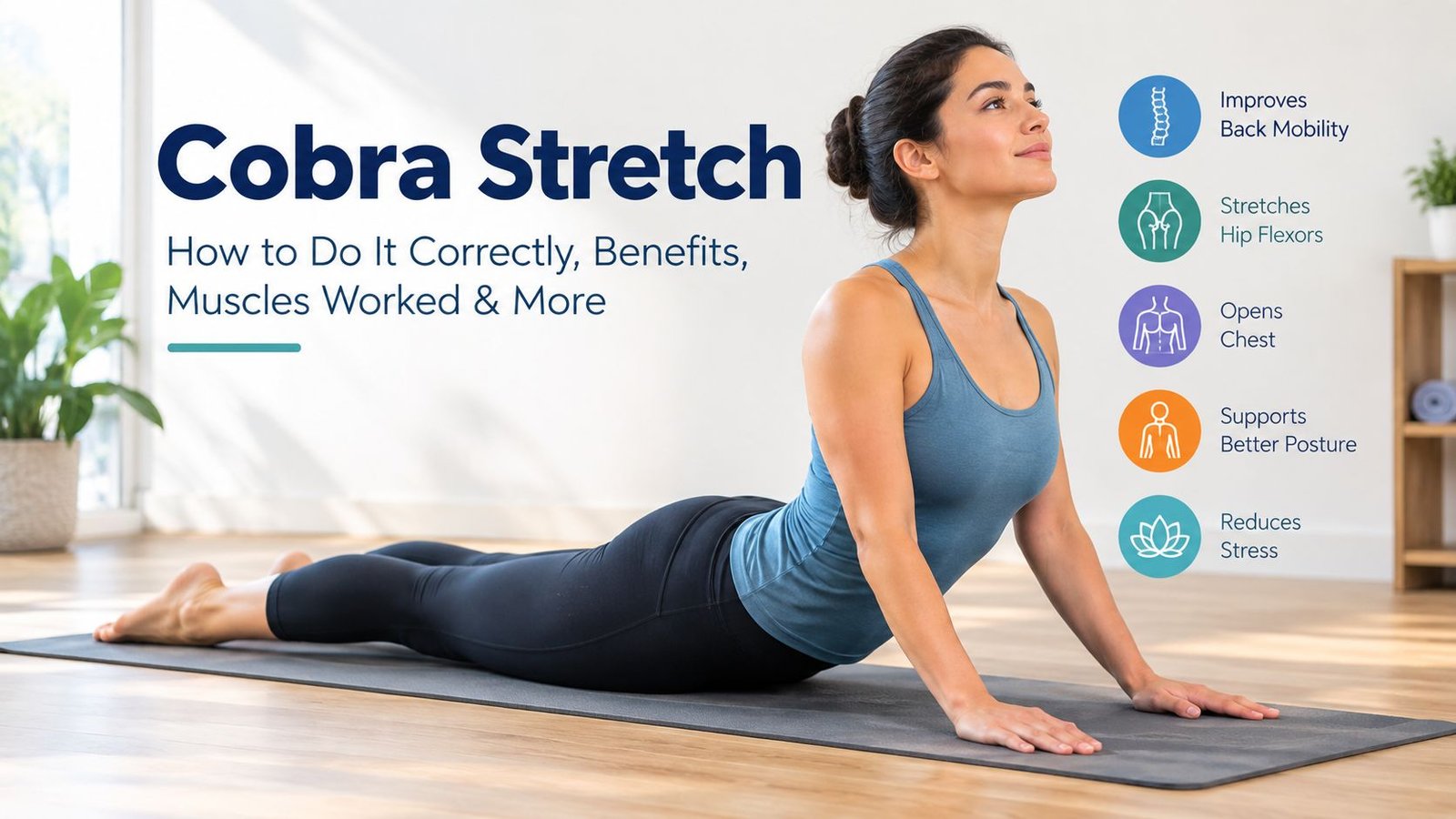
The Cobra Stretch is a floor exercise where you lie on your stomach and lift your chest by pressing your hands into the ground while keeping your hips on the floor. Hold the position for 15–30 seconds, breathe steadily, and repeat 3–5 times. It primarily stretches the abdominal muscles and hip flexors while strengthening the back muscles that support good posture.
What Is the Cobra Stretch?
The Cobra Stretch is a classic yoga pose called Bhujangasana, named after the Sanskrit word for “cobra” because the final position resembles a snake lifting its head.
Unlike a traditional passive stretch, Cobra combines gentle strengthening and stretching in the same movement. As you lift your chest, your back muscles actively support the spine while the muscles across your abdomen and chest lengthen.
It’s commonly used in:
-
Yoga routines
-
Mobility workouts
-
Back flexibility exercises
-
Posture improvement programs
-
Recovery after prolonged sitting
Because it requires no equipment, it’s one of the easiest stretches to perform almost anywhere.
Cobra Stretch at a Glance
|
Feature |
Details |
|---|---|
|
Difficulty |
Beginner |
|
Body Part |
Back, Core, Chest |
|
Equipment |
None |
|
Hold Time |
15–30 seconds |
|
Repetitions |
3–5 |
|
Best For |
Back mobility, posture, flexibility |
Muscles Worked During the Cobra Stretch
The Cobra Stretch works multiple muscle groups simultaneously, making it a full-body mobility exercise rather than just a back stretch.
Primary Muscles Worked
-
Erector spinae: Support and extend the spine.
-
Trapezius: Help stabilize the shoulders.
-
Triceps: Assist as you press into the floor.
-
Glutes: Lightly engage to help stabilize the pelvis.
Muscles Being Stretched
-
Rectus abdominis (front abdominal muscles)
-
Internal and external obliques
-
Hip flexors
-
Pectoral (chest) muscles
-
Front of the shoulders
This balance of strengthening and stretching is one reason the Cobra Stretch is so effective for improving posture.
How to Do the Cobra Stretch Correctly
Proper technique matters more than lifting your chest as high as possible. Focus on controlled movement and steady breathing.
Step 1: Starting Position

Lie face down on a yoga mat or comfortable floor surface.
-
Extend both legs behind you.
-
Keep the tops of your feet on the floor.
-
Place your palms beneath or slightly beside your shoulders.
-
Keep your elbows tucked close to your body.
Beginner Tip: Relax your neck and let your forehead lightly rest on the mat before starting.
Step 2: Lift Your Chest

Take a slow inhale.
-
Press gently through your palms.
-
Lift your chest away from the floor.
-
Keep your pelvis and hips pressed into the ground.
-
Allow your elbows to stay slightly bent if needed.
Avoid forcing the movement by pushing too hard with your arms.
Step 3: Hold the Position

Once you reach a comfortable height:
-
Hold for 15–30 seconds.
-
Continue breathing normally.
-
Keep your shoulders pulled down away from your ears.
-
Look slightly forward instead of throwing your head backward.
You should feel a stretch across your abdomen and chest—not sharp pain in your lower back.
Step 4: Return Slowly

Exhale as you slowly lower your chest.
-
Return with control.
-
Rest briefly.
-
Repeat 3–5 times if comfortable.
Proper Form Checklist
Before each repetition, quickly check your form.
These small adjustments make the stretch more effective and help reduce unnecessary strain.
Cobra Stretch Benefits
The Cobra Stretch offers benefits that go beyond flexibility. When practiced regularly, it can improve mobility, posture, and overall movement quality.
Improves Back Mobility

The movement encourages your spine to move through gentle extension, which can help reduce stiffness caused by prolonged sitting.
Opens Tight Hip Flexors

Because your hips remain on the floor while your chest lifts, the front of your hips receives a natural stretch that may help counteract tightness from desk work.
Opens the Chest

The stretch helps lengthen the chest muscles, making it easier to stand with better posture.
Supports Better Posture

Strengthening the muscles that support your spine while opening the front of your body can encourage a more upright posture over time.
Encourages Deep Breathing

Opening the chest allows many people to breathe more comfortably during the exercise, making it a relaxing addition to mobility routines.
Cobra Stretch for Back Pain
Many people search for the Cobra Stretch for back pain, and it can be helpful for some individuals—especially when stiffness is caused by prolonged sitting.
However, it’s important to understand that not all back pain responds the same way.
It may help if:
-
Your back feels stiff after sitting.
-
You need gentle mobility.
-
You’re returning to light exercise.
Stop immediately if:
-
Pain becomes sharp.
-
Symptoms worsen.
-
Pain travels down your legs.
-
You experience numbness or tingling.
If you have ongoing or severe back pain, consult a healthcare professional before adding new exercises.
Cobra Stretch for Tight Hip Flexors
Tight hip flexors are common among people who spend long hours sitting.
The Cobra Stretch helps lengthen these muscles because your pelvis stays grounded while your upper body rises, creating a gentle stretch across the front of the hips.
People who often benefit include:
-
Office workers
-
Drivers
-
Students
-
Anyone with a sedentary lifestyle
For even better results, combine Cobra with other hip mobility exercises like lunges and kneeling hip flexor stretches.
Cobra Stretch vs Sphinx Pose
Both stretches improve spinal mobility, but they differ in intensity.
|
Cobra Stretch |
Sphinx Pose |
|---|---|
|
Hands on floor |
Forearms on floor |
|
Greater spinal extension |
Gentler extension |
|
Moderate intensity |
Beginner-friendly |
|
Stronger abdominal stretch |
Milder stretch |


If you’re new to backbends or have limited flexibility, Sphinx Pose is often a good place to start.
Cobra Stretch Variations
Changing the exercise slightly can make it easier or add variety to your routine.
Baby Cobra

Lift only a few inches off the floor while relying mostly on your back muscles.
Best for beginners.
Standing Cobra

Stand facing a wall.
-
Place your hands against it.
-
Press gently while opening your chest.
-
Ideal if lying on the floor isn’t comfortable.
Cobra Twist

After lifting into Cobra:
-
Turn your head gently toward one shoulder.
-
Return to center.
-
Repeat on the opposite side.
Reverse Cobra

This variation focuses more on strengthening the upper back than stretching the front of the body.
Prone Cobra Exercise

Unlike traditional Cobra, the Prone Cobra keeps your hands off the floor while your back muscles perform most of the work.
It’s commonly used to improve posture and upper-back endurance.
Cobra Press-Up vs Cobra Stretch
These two exercises look similar but serve slightly different purposes.
|
Cobra Stretch |
Cobra Press-Up |
|---|---|
|
Yoga-based movement |
Rehabilitation-style movement |
|
Gentle stretch |
Controlled spinal extension |
|
Hold position |
Repeated press-ups |
|
Relaxation focus |
Mobility focus |


The Cobra Press-Up is often associated with McKenzie-style spinal mobility exercises, while the Cobra Stretch is more commonly used in yoga and flexibility routines.
Common Cobra Stretch Mistakes
Avoid these common errors to make the exercise safer and more effective.
|
Mistake |
Better Form |
|---|---|
|
Locking elbows |
Keep a slight bend |
|
Lifting hips |
Keep pelvis grounded |
|
Shrugging shoulders |
Pull shoulders down |
|
Throwing head back |
Keep neck neutral |
|
Moving too quickly |
Lift and lower slowly |
Remember: the goal is a comfortable stretch—not the highest possible lift.
How Long Should You Hold a Cobra Stretch?
The ideal hold depends on your goal.
|
Goal |
Hold Time |
|---|---|
|
Beginner |
15 seconds |
|
General flexibility |
20–30 seconds |
|
Warm-up |
10–15 seconds |
|
Cool-down |
20–30 seconds |
Perform 3–5 repetitions while breathing normally throughout each hold.
5-Minute Beginner Cobra Stretch Routine
Try this simple mobility sequence.
|
Exercise |
Time |
|---|---|
|
Cat-Cow |
30 sec |
|
Cobra Stretch |
20 sec |
|
Child’s Pose |
30 sec |
|
Repeat |
3 rounds |


This combination balances spinal extension with gentle recovery.
Who Should Avoid the Cobra Stretch?
Skip or modify the exercise if you have:
-
Severe lower back pain
-
Recent abdominal surgery
-
Hernia
-
Wrist injuries
-
Pregnancy (a standing wall variation may be more comfortable)
-
Neck injuries that worsen with extension
If you’re unsure whether the exercise is appropriate, seek guidance from a qualified healthcare professional.
Frequently Asked Questions
Is the Cobra Stretch good for lower back pain?
It may help relieve stiffness for some people, but stop immediately if the movement increases pain or causes symptoms to travel into your legs.
Does Cobra Stretch help hip flexors?
Yes. Keeping your pelvis on the floor naturally stretches the front of the hips, making it useful for people with tight hip flexors.
What’s the difference between Cobra Stretch and Cobra Pose?
They’re essentially the same movement. “Cobra Pose” is the yoga name (Bhujangasana), while “Cobra Stretch” is the more common fitness term.
Can beginners do the Cobra Stretch?
Yes. Beginners can start with a smaller range of motion or choose Baby Cobra or Sphinx Pose until they become more comfortable.
Should my hips stay on the floor?
Yes. Your pelvis should remain grounded throughout the movement for proper form.
How many times should I do the Cobra Stretch?
Most people benefit from 3–5 repetitions, holding each stretch for 15–30 seconds.
Is the Cobra Stretch better before or after a workout?
It works well after a workout as a cool-down or during a mobility session. Before exercise, use shorter holds and controlled movement.
Can the Cobra Stretch increase height?
The Cobra Stretch doesn’t increase bone length, but improving posture can help you stand taller by reducing slouching.
Final Takeaway
The Cobra Stretch is a beginner-friendly exercise that combines spinal mobility, chest opening, and hip flexor stretching into one simple movement. By keeping your hips grounded, lifting your chest gradually, and avoiding excessive lower-back arching, you can safely build flexibility while strengthening the muscles that support good posture.
Whether you’re adding it to a yoga routine, using it to loosen up after sitting all day, or incorporating it into a back mobility program, consistent practice with proper form is more valuable than pushing for a deeper stretch. A few controlled repetitions each day can help you move more comfortably and confidently over time.