15 Best Chinese Barbell Manufacturers in 2026: OEM, Wholesale & Factory Guide
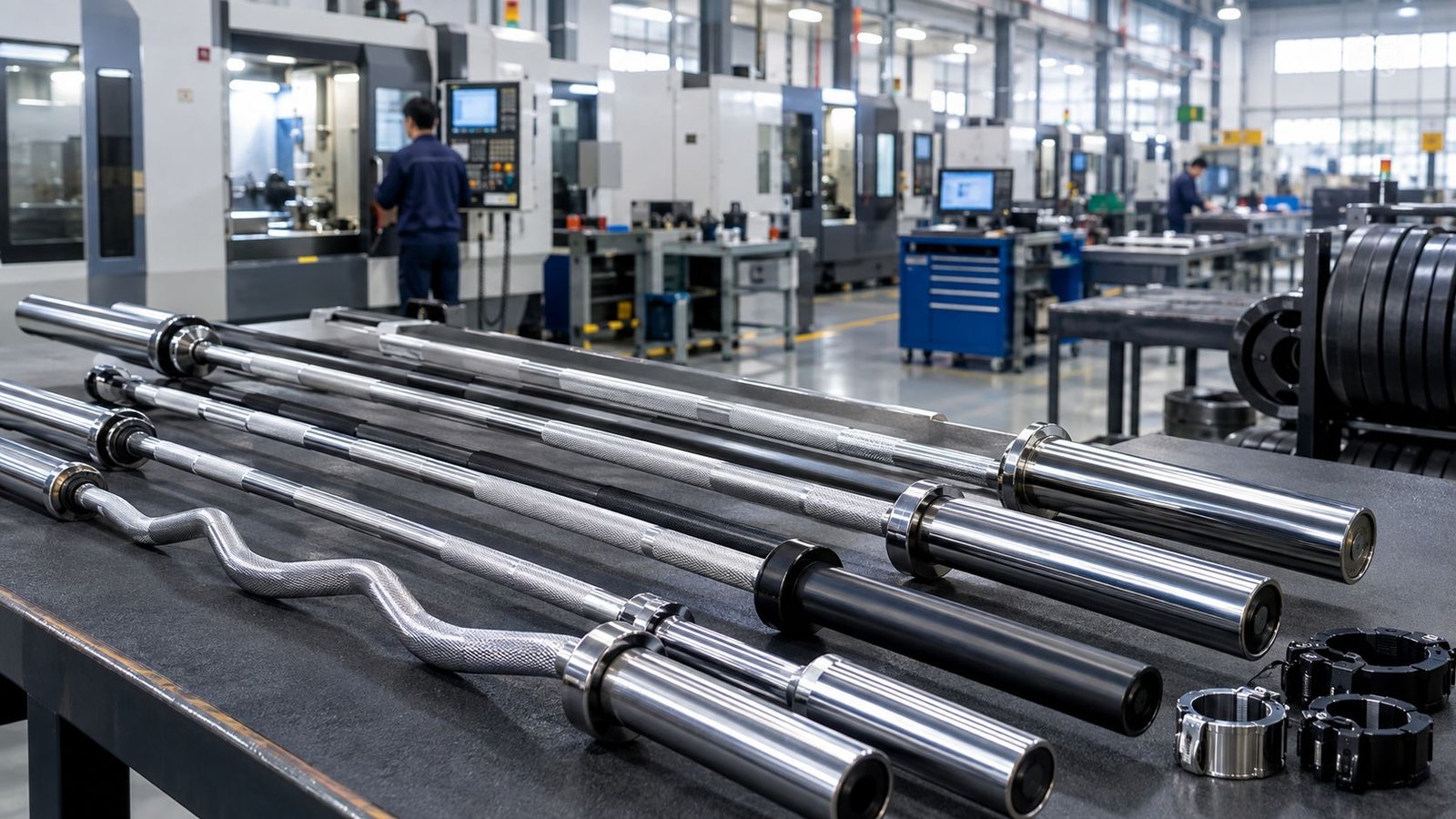
China has become one of the world’s major sourcing markets for fitness equipment, including Olympic barbells, powerlifting bars, specialty bars, fixed barbells, and custom-branded products. But finding the right Chinese barbell manufacturer is not as simple as choosing the supplier with the lowest quotation.
Different factories specialize in different areas. Some focus on Olympic weightlifting bars, while others are better suited to commercial gyms, private-label fitness brands, e-commerce businesses, or large wholesale orders. There are also suppliers that offer OEM and ODM production, allowing buyers to customize everything from the bar’s specifications and finish to its logo and packaging.
The challenge is separating a genuine manufacturing partner from a trading company and then determining whether its quality, production capacity, customization options, and pricing match your requirements.
In this guide, we’ll look at 15 Chinese barbell manufacturers and suppliers, explain what each is best suited for, and show you what to check before placing a wholesale or OEM order.
Quick Comparison of Chinese Barbell Manufacturers
| Manufacturer | Location | Best For | OEM/ODM | Main Barbell Focus | Buyer Type |
|---|---|---|---|---|---|
| YR Fitness | Anhui | Commercial gym equipment | Yes | Commercial barbells | Gyms & distributors |
| Union Max | China | Custom & wholesale barbells | Yes | Olympic & specialty bars | Brands & wholesalers |
| Master Barbell | Jiangsu | Powerlifting & strength bars | Yes | Olympic & powerlifting bars | Strength brands |
| IRONHUE | China | Private-label Olympic bars | Yes | Olympic barbells | Fitness brands |
| Bucks Sports | Suzhou | Olympic barbell OEM | Yes | Olympic barbells | OEM buyers |
| Wavar | China | Custom fitness equipment | Yes | Barbells & strength equipment | Importers |
| Topko Industries | China | Bulk fitness sourcing | Yes | Barbells & strength equipment | Distributors |
| Procircle Fitness | China | E-commerce sourcing | Yes | Barbells & accessories | Online brands |
| Everise Fitness | China | International gym projects | Yes | Strength equipment | Commercial buyers |
| Joinfit | Shenzhen | Fitness product sourcing | Yes | Barbells & accessories | Fitness retailers |
| Wanjia Fitness | China | Commercial fitness projects | Yes | Barbells & gym equipment | Gyms & dealers |
| ZKC | China | Weightlifting equipment | Yes | Olympic/competition bars | Weightlifting users |
| Tellus Fitness | Guangzhou | Custom fitness equipment | Yes | Barbells & strength products | Custom projects |
| Barbell China / Hefei Strong Sports | China | Private labeling | Yes | Barbells & free weights | Importers |
| YIFENG Fitness | China | Fixed barbells | Yes | Fixed-weight barbells | Gyms & retailers |
Note: Manufacturer capabilities, minimum order quantities, certifications, prices, and production terms can change. Always request current specifications and commercial terms directly from a supplier before ordering.
15 Best Chinese Barbell Manufacturers
1. YR Fitness — Best for Commercial Gym Equipment
YR Fitness is a Chinese commercial fitness equipment manufacturer offering a broad range of gym products rather than specializing exclusively in barbells.
Its product portfolio includes strength machines, racks, cardio equipment, free weights, accessories, and commercial fitness equipment. This makes the company particularly relevant for buyers who are sourcing complete gym equipment packages rather than purchasing barbells alone.
Why consider YR Fitness?
- Broad commercial fitness equipment catalog
- Barbells and free-weight equipment
- Suitable for commercial gym projects
- International export experience
- Customization options
- One-stop equipment sourcing
Best for
YR Fitness is worth considering if you are opening a commercial gym, supplying multiple facilities, or looking for a supplier that can provide barbells alongside racks, machines, benches, and other equipment.
Potential limitation
If your business specializes specifically in competition-grade Olympic or powerlifting barbells, a manufacturer focused more heavily on barbell engineering may be a better fit.
2. Union Max — Best for Custom and Wholesale Barbells
Union Max is particularly interesting for buyers looking for a broad selection of barbell designs. Its published product range includes Olympic bars, standard bars, EZ curl bars, trap bars, safety squat bars, Swiss bars, women’s Olympic bars, and fixed barbells.
The company also advertises OEM/ODM and wholesale manufacturing capabilities.
Key strengths
- Broad barbell selection
- Olympic barbells
- Standard barbells
- EZ curl bars
- Trap bars
- Safety squat bars
- Swiss bars
- Women’s bars
- Fixed barbells
- OEM/ODM services
- Wholesale production
Best for
Union Max is a strong option for fitness brands and distributors that want to source several different barbell types from one supplier.
Potential limitation
Because its range covers many categories, buyers seeking a highly specialized competition bar should compare its specifications with dedicated weightlifting or powerlifting manufacturers.
3. Master Barbell — Best for Strength and Powerlifting Products
Master Barbell focuses heavily on barbell manufacturing and strength-training products.
Its published product range includes Olympic bars and powerlifting bars, including 29 mm powerlifting bars designed for heavy squat, bench press, and deadlift training.
The company also advertises OEM and ODM production, including customized logos, packaging, materials, and product specifications.
Key strengths
- Powerlifting bars
- Olympic bars
- Specialty strength bars
- OEM/ODM production
- Custom logos
- Custom packaging
- Custom product specifications
- CNC and manufacturing equipment
- Export experience
Best for
This type of manufacturer is particularly relevant to brands building a strength-training product line or looking for custom powerlifting equipment.
Potential limitation
Always request detailed technical specifications rather than judging a bar by its marketing description alone.
4. IRONHUE — Best for Private-Label Olympic Barbells
IRONHUE focuses on Olympic barbells and private-label manufacturing.
Its published range includes men’s 20 kg bars, women’s 15 kg bars, technique bars, and different sleeve configurations. The company states that its Olympic bars are manufactured in its own factory in China and supports private-label customization.
Key strengths
- Olympic barbells
- Men’s and women’s bars
- Technique bars
- Bushing options
- Bearing options
- Custom logos
- Custom colors
- Custom packaging
- Private-label production
Best for
IRONHUE may be particularly suitable for fitness brands that want to launch their own branded Olympic barbell line.
Potential limitation
Private-label buyers should confirm MOQ, tooling costs, sample requirements, production lead times, and packaging specifications before placing an order.
5. Bucks Sports — Best for Olympic Barbell OEM
Suzhou Bucks Sports & Leisure Products Co., Ltd. focuses on Olympic barbell manufacturing and OEM services.
The company states that it provides services covering design, drawings, prototyping, manufacturing, and sourcing.
Key strengths
- Olympic barbells
- OEM production
- Product development
- Prototyping
- Manufacturing
- Custom specifications
- Free-weight products
Best for
Bucks Sports is worth considering for companies that need more than simple logo printing and want support during product development.
Potential limitation
Buyers should clearly define whether they need an existing product customized or a completely new barbell developed from their own specifications.
6. Wavar — Best for Broad Fitness Equipment Sourcing
Wavar is another Chinese fitness equipment supplier that can be considered by buyers looking for more than a single barbell model.
Suppliers with broad product catalogs can be useful when a distributor wants to consolidate multiple fitness products into one sourcing relationship.
Key strengths
- Barbells
- Free weights
- Strength equipment
- Fitness accessories
- OEM/ODM options
- Broad product sourcing
Best for
Wavar can be considered by distributors and fitness businesses that want to source barbells together with other gym equipment.
Potential limitation
If your main requirement is a highly specialized Olympic or powerlifting bar, compare its technical specifications with dedicated barbell specialists.
7. Topko Industries — Best for Bulk Fitness Equipment Sourcing
Topko Industries is a broader fitness equipment supplier rather than a barbell-only manufacturer.
Its product portfolio covers strength-training equipment and free weights, making it potentially useful for distributors purchasing multiple categories.
Key strengths
- Barbells
- Dumbbells
- Strength equipment
- Fitness accessories
- OEM/customization
- Bulk sourcing
Best for
Topko can be considered by distributors and wholesalers that want to combine barbells with other strength equipment.
Potential limitation
Buyers should evaluate the exact factory and production line responsible for the barbell they intend to purchase.
8. Procircle Fitness — Best for E-Commerce Fitness Brands
Procircle Fitness is positioned around fitness equipment sourcing and customized solutions for business customers.
For online fitness brands, a supplier that can combine product sourcing, customization, branding, and packaging can be more useful than a company offering only standard products.
Key strengths
- Barbells
- Resistance equipment
- Fitness accessories
- Customization
- E-commerce-oriented sourcing
- OEM/ODM opportunities
Best for
Procircle may be suitable for e-commerce businesses developing a broader fitness product catalog.
Potential limitation
Online brands should pay particular attention to packaging, branding, sample consistency, and product photography requirements.
9. Everise Fitness — Best for International Gym Projects
Everise Fitness offers a broad selection of fitness equipment and focuses on international customers.
For buyers setting up gyms, hotels, studios, or fitness facilities, a supplier capable of handling multiple equipment categories can simplify procurement.
Key strengths
- Barbells
- Strength equipment
- Fitness accessories
- Commercial gym equipment
- Customization
- International sourcing
Best for
Everise is worth considering for commercial projects requiring barbells together with other fitness equipment.
Potential limitation
A broad catalog does not necessarily mean specialization in every individual product category, so request detailed barbell specifications and sample products.
10. Joinfit — Best for Fitness Product Distribution
Joinfit is a Chinese fitness equipment brand and supplier with a broad product range covering functional training, yoga, Pilates, strength equipment, and accessories.
Its wider catalog can be useful for retailers or distributors looking for multiple fitness categories.
Key strengths
- Barbells
- Functional training equipment
- Fitness accessories
- Home fitness products
- Commercial fitness equipment
- International distribution
Best for
Joinfit may be a good fit for retailers and distributors that want to source a broader range of fitness products.
Potential limitation
If your brand is specifically built around premium Olympic or powerlifting barbells, compare dedicated barbell factories before making a decision.
11. Wanjia Fitness Equipment — Best for Commercial Gym Projects
Wanjia Fitness Equipment is another supplier focused on commercial fitness equipment.
Its product portfolio includes strength equipment and free-weight products such as barbells.
Key strengths
- Commercial gym equipment
- Barbells
- Strength equipment
- Benches
- Equipment packages
- Wholesale supply
Best for
Commercial gyms, dealers, and fitness equipment distributors can consider Wanjia when purchasing several equipment categories together.
Potential limitation
Request current factory information, production capacity, barbell specifications, and quality-control documentation before placing a large order.
12. ZKC — Best for Weightlifting Equipment
ZKC is particularly relevant to buyers interested in weightlifting equipment rather than general-purpose gym barbells.
The company has a long history in the weightlifting equipment sector, making it a name worth investigating for specialized buyers.
Key strengths
- Olympic weightlifting equipment
- Weightlifting barbells
- Competition-oriented equipment
- Specialty weightlifting products
- Long industry history
Best for
Weightlifting clubs, serious athletes, training facilities, and buyers specifically interested in Olympic lifting equipment.
Potential limitation
Competition-oriented products may not be necessary for a budget commercial gym or entry-level fitness brand.
13. Tellus Fitness — Best for Custom Fitness Equipment
Tellus Fitness focuses on customized fitness equipment and can be considered by businesses that want to develop products around specific design requirements.
Key strengths
- Barbells
- Kettlebells
- Strength equipment
- Custom designs
- OEM/ODM
- Product development
- Commercial and home fitness equipment
Best for
Tellus may be useful for brands that prioritize product customization and design.
Potential limitation
Highly customized products can require additional development time compared with standard catalog products.
14. Barbell China / Hefei Strong Sports — Best for Private Label and Customization
Hefei Strong Sports operates the Barbell China website and promotes OEM production for buyers seeking customized fitness equipment.
The company states that it can produce products with customer logos and designs and make modifications to existing products.
Key strengths
- Barbells
- Free weights
- Custom logos
- Custom designs
- Product modifications
- OEM manufacturing
- Private-label opportunities
Best for
This supplier may be useful for businesses looking to launch branded fitness equipment without designing an entirely new manufacturing system.
Potential limitation
Ask for a sample before committing to a large production run, particularly when making modifications to an existing design.
15. YIFENG Fitness — Best for Fixed Barbells
YIFENG Fitness focuses on fixed barbells and offers wholesale and OEM services for fitness brands, commercial gyms, distributors, and sporting-goods retailers.
Its published options include customized shapes, colors, logos, weight markings, packaging, and selected small-batch customization.
Key strengths
- Fixed barbells
- Rubber-coated options
- Polyurethane options
- Custom colors
- Custom logos
- Weight markings
- Packaging customization
- OEM production
- Fixed-barbell racks
Best for
YIFENG is particularly relevant if your business needs fixed-weight barbells for commercial gyms or retail.
Potential limitation
Fixed barbells serve a different purpose from Olympic and powerlifting bars, so compare suppliers according to the type of training equipment you actually need.
Types of Barbells You Can Source From China
One advantage of sourcing from China is the sheer variety of barbell designs available.
Before contacting a manufacturer, determine exactly what type of bar your business requires.
Olympic Barbells
Olympic barbells generally use 50 mm sleeves and are designed for exercises such as cleans, snatches, squats, deadlifts, and presses.
Important specifications include:
- Shaft diameter
- Shaft length
- Bar weight
- Sleeve length
- Knurling
- Sleeve rotation
- Bearings or bushings
- Steel specification
- Coating
Standard men’s Olympic bars are commonly around 20 kg and 2.2 meters long, while women’s bars are commonly around 15 kg and 2.01 meters.
However, specifications vary by manufacturer, so always confirm the exact dimensions.
Powerlifting Barbells
Powerlifting bars are designed primarily for squat, bench press, and deadlift training.
They generally prioritize:
- Stiffness
- Strong knurling
- High load capacity
- Lower whip
- Durable construction
A powerlifting brand should pay close attention to shaft diameter, tensile strength, knurling pattern, and center knurling.
Weightlifting Barbells
Weightlifting bars are designed for explosive Olympic movements such as:
- Snatch
- Clean and jerk
Compared with many powerlifting bars, weightlifting bars typically place greater emphasis on controlled whip and smooth sleeve rotation.
Deadlift Bars
Deadlift bars are generally longer and more flexible than conventional powerlifting bars.
Their characteristics can include:
- Longer shaft
- Greater whip
- Aggressive knurling
- Long loadable sleeves
Safety Squat Bars
Safety squat bars are designed with shoulder padding and handles, allowing the lifter to maintain a different hand and torso position during squats.
EZ Curl Bars
EZ curl bars use a curved shaft to create a different wrist position during biceps and triceps exercises.
Trap Bars
Trap bars allow the user to stand inside the bar rather than behind it.
They are commonly used for:
- Deadlifts
- Shrugs
- Carries
- General strength training
Swiss Bars
Swiss bars, also called multi-grip bars, provide several grip positions.
They can be useful for commercial gyms because different users can choose a grip that feels comfortable for pressing and pulling movements.
Fixed Barbells
Fixed barbells have permanently attached weights.
They are popular in commercial gyms because users can quickly select a predetermined weight without loading plates.
How Much Does a Barbell Cost From China?
There is no single factory price for a Chinese barbell.
Two products that look almost identical in photographs can have very different manufacturing costs because of differences in steel, machining, heat treatment, coating, sleeve design, bearings, packaging, customization, and order volume.
Factors that affect the price include:
- Steel type
- Shaft diameter
- Bar length
- Tensile strength
- Heat treatment
- Knurling
- Surface coating
- Sleeve construction
- Bearings or bushings
- Logo customization
- Packaging
- Order quantity
- Testing requirements
- Shipping terms
A basic standard bar can be dramatically cheaper than a competition-oriented Olympic bar.
For this reason, don’t compare quotations based solely on the price per bar.
Instead, compare price against the complete product specification.
Factory Price vs. Landed Cost
The price quoted by a Chinese manufacturer is not necessarily the amount you will ultimately pay.
Your landed cost can include:
Product price + customization + packaging + inland transportation + international freight + customs duties + taxes + destination charges + local delivery
For example, a supplier offering a lower factory price may become more expensive after freight or customization costs are added.
Before ordering, request a quotation based on the same:
- Product specification
- Quantity
- Packaging
- Logo requirements
- Destination
- Incoterm
- Delivery requirements
That makes supplier comparisons much more meaningful.
What Makes a High-Quality Chinese Barbell?
The country where a barbell is manufactured does not automatically determine its quality.
Chinese factories produce everything from inexpensive entry-level bars to highly specialized strength equipment.
The important question is:
What are the specifications and quality-control processes behind the particular barbell?
Steel Quality
Ask the manufacturer what steel is being used and request the relevant material specification where appropriate.
Don’t rely only on phrases such as “high-quality steel.”
Tensile Strength
Tensile strength indicates how much stress the bar can withstand before breaking.
However, tensile strength should not be the only specification used to judge a bar.
Yield Strength
Yield strength describes the stress level at which permanent deformation begins.
For heavy-use barbells, it is an important specification to understand.
Shaft Straightness
A barbell should be manufactured and inspected for acceptable straightness.
A bent or poorly finished shaft can affect performance and user confidence.
Knurling Quality
Knurling should provide reliable grip without being unnecessarily aggressive for the intended application.
Different bars may use different knurling patterns depending on their intended sport.
Sleeve Rotation
For Olympic lifting, sleeve rotation can be particularly important.
Ask whether the sleeves use:
- Bushings
- Bearings
- Needle bearings
Then ask how the rotation system is tested.
Heat Treatment
Heat treatment can affect the mechanical properties of the shaft.
If a manufacturer claims a specific heat-treatment process, ask for documentation or technical details where appropriate.
Surface Coating
Common finishes can include:
- Chrome
- Zinc
- Black oxide
- Cerakote
- Stainless steel
- Other proprietary finishes
Each has different characteristics in terms of appearance, grip, corrosion resistance, and maintenance.
Weight and Dimensional Tolerance
A commercial or competition-focused buyer should establish acceptable tolerances for:
- Total weight
- Length
- Shaft diameter
- Sleeve diameter
- Sleeve length
- Knurling position
Put agreed specifications in writing before production begins.
Chinese Barbell Manufacturer vs. Trading Company
Not every company selling Chinese barbells operates the factory itself.
Some businesses are manufacturers.
Others are trading companies, sourcing companies, exporters, or distributors.
Neither model is automatically good or bad, but you should understand who is actually producing your equipment.
| Factor | Manufacturer | Trading Company |
|---|---|---|
| Direct factory access | Usually | May vary |
| Product customization | Often higher | Depends on factory |
| Supplier selection | Direct | May source from several factories |
| Communication | Factory-specific | Often centralized |
| MOQ | Varies | May offer flexibility |
| Quality control | Can be managed directly | Depends on supplier relationship |
| Product range | Factory-specific | Potentially broader |
| Best for | Custom/large orders | Mixed or smaller sourcing |
Questions to ask
Before placing an order, ask:
- Are you the manufacturer?
- Where is the barbell produced?
- Is the factory owned by your company?
- Can I receive a factory video or production information?
- Which manufacturing processes are performed in-house?
- Can you provide a sample from the same production line that will manufacture my order?
These questions can help you understand the supply chain before committing to a large order.
How to Choose the Right Chinese Barbell Manufacturer
Finding a supplier is only the first step.
The more important task is deciding whether that supplier is appropriate for your business.
1. Verify the Company
Check:
- Business information
- Factory location
- Years in operation
- Product range
- Export markets
- Certifications
- Customer references where available
Don’t rely exclusively on a supplier’s marketplace profile.
2. Confirm Manufacturing Capability
Ask how the bar is manufactured.
You should understand which processes are performed internally and which may be outsourced.
3. Request Detailed Specifications
Request a technical specification sheet covering:
- Weight
- Length
- Shaft diameter
- Steel
- Tensile strength
- Coating
- Knurling
- Sleeve type
- Bearings/bushings
- Loadable sleeve length
- Weight tolerance
4. Order a Sample
A sample gives you an opportunity to inspect the actual product before committing to a larger purchase.
5. Test the Sample
Inspect:
- Straightness
- Weight
- Knurling
- Sleeve rotation
- Finish
- Welds or connections where applicable
- End caps
- Packaging
For a specialized bar, consider professional testing where appropriate.
6. Confirm MOQ
Minimum order quantities can vary considerably between suppliers and products.
Ask whether MOQ changes when you add:
- Custom colors
- Custom logos
- Custom packaging
- New specifications
- New molds
7. Confirm Lead Time
Get production lead times in writing.
Ask separately about:
- Sample lead time
- Production lead time
- Packaging
- Inspection
- Shipping
8. Discuss Packaging
Barbells are heavy steel products, so packaging matters.
Ask how the manufacturer protects:
- Shaft finish
- Sleeves
- End caps
- Knurling
- Custom branding
9. Understand Incoterms
Common terms include:
- EXW
- FOB
- CIF
- DDP
Make sure you understand exactly which costs are included in the quoted price.
10. Establish Quality-Control Requirements
For larger orders, agree on inspection criteria before manufacturing begins.
Your purchase agreement should identify what happens if products fail to meet the agreed specifications.
Questions to Ask a Chinese Barbell Manufacturer Before Ordering
Before sending a purchase order, ask the following:
- Are you a manufacturer or trading company?
- Where is the factory located?
- What steel is used for the bar?
- What is the shaft diameter?
- What is the bar’s tensile strength?
- What coating options are available?
- What type of knurling is used?
- Do the sleeves use bushings or bearings?
- What is the exact bar weight?
- What tolerances do you guarantee?
- Can you provide samples?
- What is the MOQ?
- Do you provide OEM services?
- Can you add a custom logo?
- Can you customize colors?
- Can you customize packaging?
- What is the production lead time?
- What quality tests are performed?
- Do you allow third-party inspection?
- What warranty and after-sales support do you provide?
A professional manufacturer should be able to give you clear answers to these questions.
How to Check a Chinese Barbell Factory Before Paying
Supplier verification is particularly important when placing a large international order.
Check the Business Information
Confirm the legal company name and business details.
Verify the Factory Address
Make sure the production address corresponds with the information supplied by the company.
Request Factory Photos or Video
Ask for current photographs or video showing:
- Production equipment
- Barbell machining
- Knurling
- Assembly
- Testing
- Packaging
A live video call can be even more useful.
Request Samples
Never rely entirely on catalog images.
Verify Certification Documents
If a supplier claims a certification, ask for the relevant document and check that it applies to the company, facility, product, or process you are purchasing.
Consider Third-Party Inspection
For larger orders, independent pre-shipment inspection can provide another layer of quality control.
Start With a Manageable Order
If you are working with a new supplier, a smaller initial order can help you evaluate:
- Product consistency
- Communication
- Packaging
- Production timing
- Shipping
- After-sales service
before scaling up.
OEM vs. ODM vs. Private Label Barbells
These three terms are often used interchangeably, but they can mean different things.
OEM Barbells
OEM production generally involves manufacturing according to the buyer’s specifications.
You may provide:
- Product drawings
- Dimensions
- Materials
- Coating
- Knurling requirements
- Logo
- Packaging specifications
OEM is generally more appropriate when you already know exactly what product you want.
ODM Barbells
ODM means the manufacturer provides an existing design or development capability that can be adapted for your brand.
This can reduce development work compared with designing a product completely from scratch.
Private-Label Barbells
Private labeling usually involves an existing product that is sold under your brand.
Customization may include:
- Logo
- Color
- Packaging
- Labels
- Weight markings
| Model | Customization | Development Cost | Best For |
|---|---|---|---|
| OEM | High | Higher | Established brands |
| ODM | Medium to high | Medium | Growing brands |
| Private label | Low to medium | Lower | New brands |
Chinese Barbell Manufacturing Process
Although processes differ between factories and products, a typical barbell manufacturing workflow may include several stages.
1. Steel Selection
The manufacturer selects the appropriate steel based on the bar’s intended application.
2. Cutting and Preparation
Steel stock is prepared to the required dimensions.
3. Machining
The shaft and sleeves are machined to the required dimensions.
4. Heat Treatment
Depending on the product, heat treatment may be used to achieve the required mechanical properties.
5. Straightening
The shaft is checked and adjusted to meet the required straightness.
6. Knurling
Knurling is machined onto the shaft according to the product specification.
7. Sleeve Manufacturing
The sleeves and internal components are manufactured and prepared for assembly.
8. Surface Treatment
The shaft and other components receive the specified coating or finish.
9. Assembly
The shaft, sleeves, bearings or bushings, end components, and other parts are assembled.
10. Quality Inspection
The finished product can be checked for:
- Weight
- Dimensions
- Straightness
- Surface finish
- Knurling
- Sleeve movement
- Appearance
11. Packaging
Finally, the bars are packaged for domestic transportation and international shipment.
Are Chinese Barbells Good Quality?
They can be.
The quality of a Chinese barbell depends on the manufacturer, materials, design, production controls, specifications, and inspection process—not simply the country where it was manufactured.
China has a large fitness-equipment manufacturing ecosystem, and the available supplier market includes factories producing standard bars, Olympic bars, powerlifting bars, specialty bars, fixed barbells, and custom products.
However, quality can vary significantly between suppliers.
That’s why buyers should avoid choosing a manufacturer solely because it offers the lowest price.
Instead, compare:
- Materials
- Technical specifications
- Manufacturing process
- Sample quality
- Testing
- Quality control
- Customization
- Warranty
- Production capacity
- Total landed cost
A well-specified barbell from a capable factory can be a very different product from an inexpensive generic bar that happens to look similar.
Advantages and Disadvantages of Buying Barbells From China
Advantages
Competitive Manufacturing Costs
China’s large industrial supply chain can provide competitive production costs, especially for larger orders.
Large Supplier Base
Buyers can choose among manufacturers specializing in different fitness equipment categories.
OEM and ODM Availability
Many suppliers offer custom logos, colors, packaging, specifications, and product development.
Broad Product Selection
You can source:
- Olympic bars
- Power bars
- Deadlift bars
- Trap bars
- Safety squat bars
- Swiss bars
- EZ curl bars
- Fixed barbells
- Specialty bars
Large Production Capacity
Many suppliers are equipped to handle wholesale and commercial orders.
Custom Branding
Private-label fitness brands can develop branded barbells and packaging.
Potential Disadvantages
Supplier Quality Can Vary
Not every supplier produces the same quality level.
Quality Control Requires Attention
Large orders should have clear inspection requirements.
Shipping Can Be Expensive
Barbells are heavy, so freight can represent a significant part of the landed cost.
Customs and Import Costs
International buyers need to account for applicable duties, taxes, and customs requirements.
MOQ Requirements
Some factories may require larger orders for customized products.
Warranty Handling
Resolving product issues internationally can be more complicated than dealing with a local supplier.
China Barbell Manufacturer Buying Checklist
- Before placing your order, work through this checklist:
- Manufacturer or trading company verified
- Factory address confirmed
- Business information checked
- Product specifications received
- Steel specification confirmed
- Bar weight confirmed
- Dimensions confirmed
- Coating selected
- Knurling requirements confirmed
- Sleeve construction confirmed
- Bearing/bushing system confirmed
- Sample received
- Sample tested
- MOQ confirmed
- Logo requirements approved
- Packaging approved
- Production lead time confirmed
- Quality inspection requirements agreed
- Shipping terms confirmed
- Landed cost calculated
- Warranty terms documented+
- Payment terms documented
- If you cannot answer several of these questions, you probably aren’t ready to place a large order.
Frequently Asked Questions About Chinese Barbells
What are the best Chinese barbell manufacturers?
The right manufacturer depends on your requirements. Some suppliers focus on commercial gym equipment, while others specialize in Olympic bars, powerlifting products, fixed barbells, OEM manufacturing, or private-label products.
Are Chinese barbells good quality?
Yes, Chinese manufacturers produce barbells across a wide range of quality levels. The important factors are the manufacturer’s materials, engineering, production process, specifications, testing, and quality control.
How much does a barbell cost from China?
The cost depends on the bar type, steel, dimensions, coating, sleeve design, customization, order quantity, packaging, and shipping terms. Always compare complete quotations rather than the basic unit price.
Can I order custom barbells from China?
Yes. Many Chinese suppliers offer OEM and ODM services. Depending on the manufacturer, customization can include specifications, colors, coatings, logos, packaging, weight markings, and other design elements.
What is the MOQ for Chinese barbells?
MOQ varies by supplier and product. Standard products may have lower MOQs, while custom designs, colors, packaging, and new tooling can require larger quantities.
What is the difference between OEM and ODM barbells?
OEM production generally follows the buyer’s specifications, while ODM typically involves adapting or customizing an existing manufacturer design. Private labeling usually involves branding an existing product for your business.
How do I verify a Chinese barbell manufacturer?
Check the company’s business information, factory location, manufacturing capabilities, product specifications, certifications, samples, references, and quality-control procedures. For large orders, consider independent inspection.
Which Chinese manufacturers make Olympic barbells?
Several Chinese suppliers manufacture or supply Olympic barbells. When comparing them, pay attention to bar length, weight, shaft diameter, sleeve rotation, bearings or bushings, knurling, steel specifications, coating, and quality-control procedures.
Can Chinese factories manufacture competition-grade barbells?
Some manufacturers specialize in high-performance and competition-oriented equipment. However, buyers should verify the exact product’s specifications and any claimed competition certification rather than assuming that a manufacturer’s entire catalog meets competition standards.
How long does it take to manufacture barbells in China?
Lead time varies by product, order size, customization, production schedule, and packaging requirements. Standard catalog products may be faster than newly developed or heavily customized barbells. Always request a written production schedule.
How do I import barbells from China?
The basic process is to identify suppliers, request specifications and quotations, order samples, negotiate terms, confirm the purchase agreement, arrange production and inspection, and then organize international freight, customs clearance, and local delivery.
Final Verdict: Choosing the Best Chinese Barbell Manufacturer
There isn’t one Chinese barbell manufacturer that is perfect for every buyer.
The best supplier depends on what you are trying to accomplish.
For a commercial gym, prioritize durability, consistent specifications, warranty support, and the ability to supply other equipment.
For a weightlifting facility, focus on sleeve rotation, bar whip, dimensions, knurling, mechanical properties, and relevant competition requirements.
For a powerlifting brand, pay close attention to stiffness, knurling, shaft diameter, tensile strength, and dimensional tolerances.
For an e-commerce brand, OEM/ODM capabilities, packaging, branding, MOQ, and consistent production may matter more.
For a private-label business, look for a supplier capable of maintaining the same product specifications across repeated production batches.
For a large distributor, production capacity, quality control, export experience, logistics, and total landed cost become especially important.
Most importantly, don’t choose a supplier simply because its quotation is the cheapest.
A better purchasing decision comes from comparing the complete product specification, sample quality, manufacturing capability, MOQ, quality controls, customization options, lead time, shipping costs, and after-sales support.
China offers a large and diverse barbell manufacturing ecosystem. With the right due diligence, buyers can find suppliers capable of producing everything from affordable standard bars to highly customized Olympic, powerlifting, and commercial-grade barbells.
The goal isn’t simply to find a cheap Chinese barbell.
It’s to find a manufacturer that can consistently produce the right barbell for your market at a sustainable total cost.