
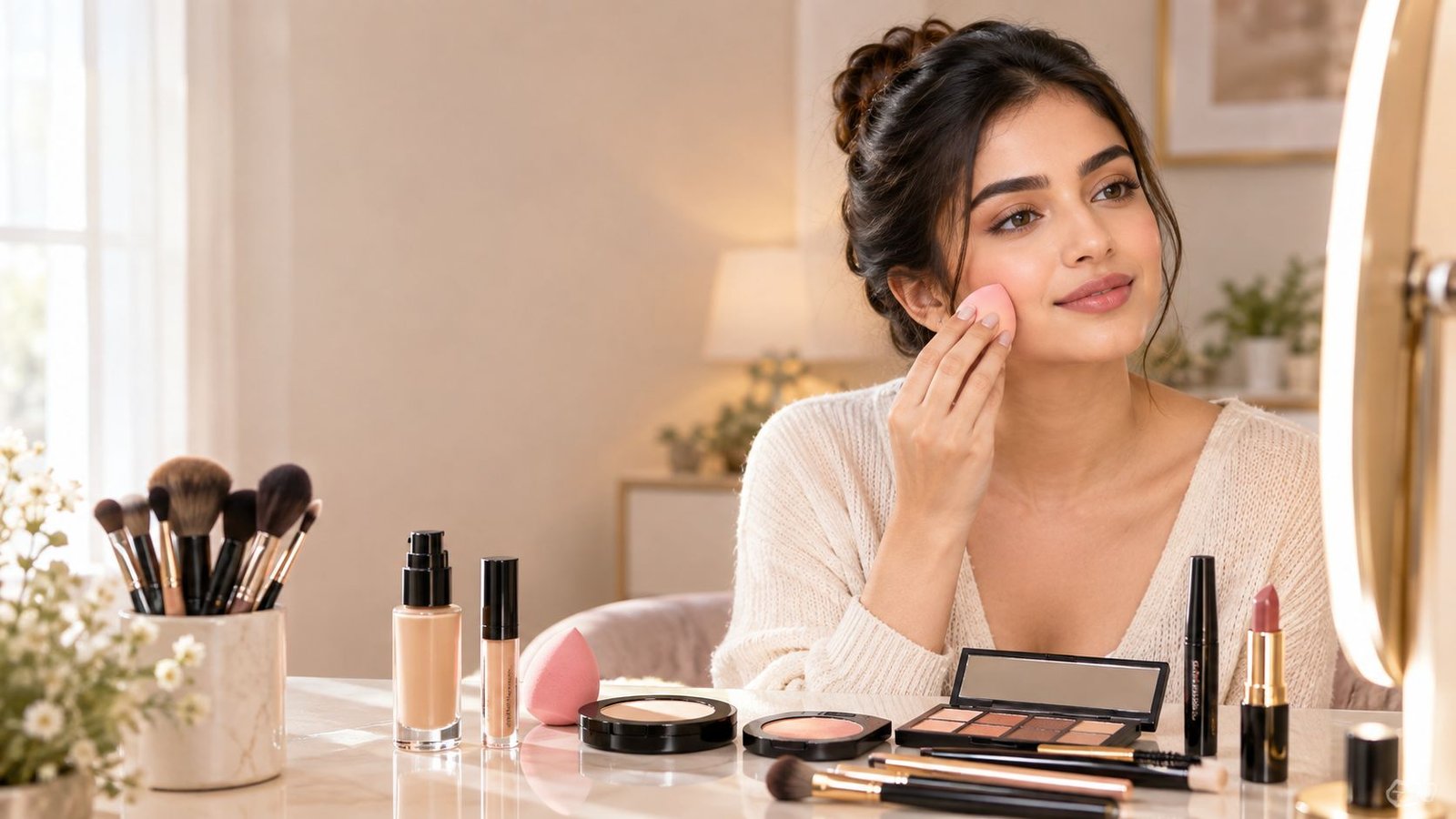
How to Do Makeup Step by Step: Beginner’s Guide to a Flawless Full Face
Learning how to do makeup step by step doesn’t have to feel overwhelming. Whether you’re getting ready for work, a party, or simply practicing at home, following the correct makeup order can make your routine easier and help your makeup look smoother, more natural, and longer-lasting.
The secret isn’t owning dozens of expensive products—it’s knowing what goes on first, how much to use, and where each product should be applied. Even beginners can achieve a polished full-face look by mastering a simple routine.
In this guide, you’ll learn the complete makeup steps in order, discover tips used by makeup artists, avoid common beginner mistakes, and find routines for different skin types and occasions.
What Are the Correct Makeup Steps?
If you’re wondering what order makeup goes in, here’s the complete sequence for a flawless finish.
|
Step |
Product |
|---|---|
|
1 |
Cleanse & Moisturize |
|
2 |
Primer |
|
3 |
Foundation |
|
4 |
Concealer |
|
5 |
Setting Powder |
|
6 |
Bronzer |
|
7 |
Blush |
|
8 |
Highlighter |
|
9 |
Eyebrows |
|
10 |
Eyeshadow |
|
11 |
Eyeliner |
|
12 |
Mascara |
|
13 |
Lipstick |
|
14 |
Setting Spray |
Think of this as your makeup cheat sheet. Once you become comfortable with these steps, you can shorten or customize the routine based on the occasion.
Before You Start: Prepare Your Skin
Great makeup starts with healthy, well-prepared skin. Skipping skincare often leads to patchy foundation, dry areas, and makeup that fades quickly.
Cleanse Your Face
Wash your face with a gentle cleanser to remove oil, dirt, and leftover skincare from earlier in the day. Clean skin creates a fresh base for makeup.
Avoid harsh cleansers that leave your skin feeling tight, as they can make foundation cling to dry patches.
Apply Moisturizer
Moisturizer keeps your skin hydrated and helps foundation blend more evenly.
Use a moisturizer suited to your skin type:
|
Skin Type |
Best Moisturizer |
|---|---|
|
Oily |
Lightweight gel |
|
Dry |
Rich cream |
|
Combination |
Balancing lotion |
|
Sensitive |
Fragrance-free moisturizer |
Allow it to absorb for a minute before moving to the next step.
Don’t Skip Sunscreen During the Day
If you’re applying makeup in the morning, sunscreen should come before primer.
Choose a lightweight sunscreen that works well under makeup and gives it time to settle before layering products.
Choose the Right Primer
Primer creates a smoother canvas and helps makeup last longer.
|
Skin Type |
Best Primer |
|---|---|
|
Oily |
Mattifying |
|
Dry |
Hydrating |
|
Combination |
Balancing |
|
Sensitive |
Silicone-free or fragrance-free |
Apply a thin layer, focusing on areas where makeup usually fades first, such as the T-zone.
Makeup Tools You’ll Need
You don’t need a professional makeup kit to create beautiful results. A few essential tools can make application much easier.
Essential Makeup Brushes
-
Fluffy powder brush
-
Blush brush
-
Eyeshadow blending brush
-
Small angled eyebrow brush
-
Lip brush (optional)
Beauty Sponge vs. Makeup Brush
|
Tool |
Best For |
|---|---|
|
Beauty Sponge |
Natural, skin-like finish |
|
Foundation Brush |
Faster application and fuller coverage |
|
Fingers |
Cream products and quick touch-ups |
Many beginners prefer a damp beauty sponge because it blends foundation without leaving noticeable streaks.
How to Do Makeup Step by Step
Now let’s go through each step of a complete makeup routine.
Step 1: Apply Primer


Primer helps smooth pores, control oil, and improve makeup wear.
How to apply it:
-
Use a pea-sized amount.
-
Apply it to your forehead, cheeks, nose, and chin.
-
Blend outward using your fingertips.
Beginner mistake: Using too much primer can cause foundation to roll or separate.
Step 2: Apply Foundation


Foundation evens out your skin tone and creates the base for the rest of your makeup.
Find Your Shade
Instead of matching foundation to your hand, test it along your jawline. The correct shade should blend seamlessly into both your face and neck.
How to Apply Foundation
-
Dot foundation across your forehead, cheeks, nose, and chin.
-
Blend outward.
-
Don’t forget your jawline and neck.
Build coverage gradually rather than applying a thick layer all at once.
Pro Tip: A damp beauty sponge creates one of the most natural-looking finishes.
Step 3: Apply Concealer


Concealer brightens dark areas and covers imperfections.
Where to Apply Concealer
-
Under the eyes
-
Around the nose
-
On blemishes
-
Around the mouth
-
On redness
Use small amounts and blend immediately before the product dries.
Step 4: Set Everything with Powder


Setting powder prevents shine and helps makeup stay in place.
Loose vs. Pressed Powder
|
Loose Powder |
Pressed Powder |
|---|---|
|
Better for full-face setting |
Better for touch-ups |
|
Lightweight |
Portable |
|
Softer finish |
More coverage |
Focus powder on areas that become oily, especially:
-
Forehead
-
Nose
-
Chin
If your skin is dry, use less powder to keep your complexion fresh.
Step 5: Add Bronzer


Bronzer adds warmth and dimension.
Apply it lightly to:
-
Forehead
-
Cheekbones
-
Jawline
Blend thoroughly to avoid harsh lines.
Think of bronzer as adding warmth—not creating obvious stripes.
Step 6: Apply Blush


Blush instantly makes your face look healthier and more awake.
Blush Placement by Face Shape
|
Face Shape |
Placement |
|---|---|
|
Round |
Blend upward toward temples |
|
Oval |
Apples of cheeks |
|
Heart |
Outer cheeks |
|
Square |
Soft circular blending |
Smile gently to locate the apples of your cheeks, then blend upward.
Cream blush creates a natural finish, while powder blush offers longer wear.
Step 7: Apply Highlighter


Highlighter adds brightness to the high points of your face.
Apply it lightly to:
-
Top of cheekbones
-
Bridge of the nose
-
Brow bone
-
Cupid’s bow
-
Inner corners of the eyes
A little goes a long way.
Step 8: Shape Your Eyebrows


Well-groomed brows frame your entire face.
Easy Brow Routine
-
Brush hairs upward.
-
Fill sparse areas with light strokes.
-
Blend with a spoolie.
-
Set with brow gel if needed.
Choose a brow shade that’s close to your natural hair color for the most natural look.
Step 9: Apply Eyeshadow


Eyeshadow doesn’t have to be complicated.
Simple Beginner Eyeshadow
Use three shades:
-
Light shade on the eyelid
-
Medium shade in the crease
-
Slightly darker shade on the outer corner
Blend each color until there are no visible edges.
Neutral browns and soft taupes are great beginner choices because they’re forgiving and suit most skin tones.
Step 10: Apply Eyeliner


Eyeliner helps define your eyes.
Eyeliner Options
|
Type |
Best For |
|---|---|
|
Pencil |
Beginners |
|
Gel |
Soft definition |
|
Liquid |
Sharp wings |
Start with a thin line close to your lashes. You can always make it thicker later.
Brown eyeliner often looks softer for daytime makeup than black.
Step 11: Apply Mascara


How to Apply Mascara
-
Curl your lashes first.
-
Wiggle the wand at the roots.
-
Sweep upward.
-
Add a second coat if desired.
Avoid pumping the mascara wand repeatedly inside the tube, as it introduces air and dries out the product.
Step 12: Apply Lipstick


Easy Lip Routine
-
Line your lips if desired.
-
Apply lipstick from the center outward.
-
Blot gently for longer wear.
-
Add gloss if you want extra shine.
Choose nude shades for everyday wear and bolder colors for evenings.
Step 13: Lock Everything with Setting Spray


Hold the bottle about an arm’s length away and mist evenly across your face.
Allow it to dry naturally without touching your face.
Full Face Makeup Routine for Beginners


|
Time |
Step |
|---|---|
|
2 min |
Skin prep |
|
3 min |
Foundation |
|
2 min |
Concealer |
|
2 min |
Brows |
|
3 min |
Eyes |
|
2 min |
Blush |
|
1 min |
Lips |
Once you’re comfortable, you can add bronzer, highlighter, and eyeliner for a more polished look.
How to Do Everyday Makeup in 10 Minutes


A quick everyday look includes:
-
Moisturizer
-
Primer (optional)
-
Lightweight foundation or skin tint
-
Concealer
-
Mascara
-
Cream blush
-
Tinted lip balm
This routine looks fresh while requiring very little effort.
How to Turn Day Makeup into Night Makeup


Make Your Look More Glamorous
-
Add darker eyeliner.
-
Deepen your eyeshadow.
-
Apply another coat of mascara.
-
Add bronzer for extra definition.
-
Switch to a bold lipstick.
-
Add shimmer to the center of your eyelids.
These small changes can transform a natural daytime look into evening makeup within minutes.
How to Apply Makeup Like a Professional


Pro Makeup Tips
-
Apply products in thin layers.
-
Blend longer than you think you need to.
-
Match foundation to your neck.
-
Use natural lighting whenever possible.
-
Clean your brushes regularly.
-
Build intensity gradually instead of applying too much at once.
The biggest difference between amateur and professional-looking makeup is usually smooth blending.
Makeup Routine by Skin Type


Oily Skin
Focus on oil control.
-
Mattifying primer
-
Lightweight foundation
-
Powder on the T-zone
-
Long-wear formulas
Dry Skin
Prioritize hydration.
-
Rich moisturizer
-
Hydrating primer
-
Dewy foundation
-
Minimal powder
Combination Skin
Treat different areas differently.
-
Mattify the T-zone.
-
Keep cheeks hydrated.
-
Powder only where needed.
Mature Skin
Aim for a fresh, natural finish.
-
Hydrating skincare
-
Lightweight foundation
-
Cream blush
-
Less powder around fine lines
Makeup Routine by Occasion


Office Makeup
-
Natural foundation
-
Soft brows
-
Neutral eyeshadow
-
Nude lips
Party Makeup
-
Fuller coverage
-
Shimmer eyeshadow
-
Defined eyeliner
-
Bold lipstick
Wedding Guest Makeup
-
Long-wearing foundation
-
Soft glam eyes
-
Rosy blush
-
Setting spray
Date Night Makeup
-
Warm bronzer
-
Soft smoky eyes
-
Glossy lips
Common Makeup Mistakes Beginners Make


Using the Wrong Foundation Shade
Always test along your jawline instead of your wrist.
Applying Too Much Powder
Heavy powder can make skin look dry and cakey.
Skipping Primer
Primer can make a noticeable difference in how long makeup lasts.
Forgetting to Blend
Blend around:
-
Jawline
-
Hairline
-
Nose
-
Neck
Overdrawing Brows
Use light, hair-like strokes instead of solid blocks of color.
Makeup Order Cheat Sheet

Here’s an easy checklist to remember every time you do your makeup.
-
Cleanse
-
Moisturize
-
Sunscreen (daytime)
-
Primer
-
Foundation
-
Concealer
-
Powder
-
Bronzer
-
Blush
-
Highlighter
-
Eyebrows
-
Eyeshadow
-
Eyeliner
-
Mascara
-
Lips
-
Setting Spray
Save this order until it becomes second nature.
Makeup Tips That Instantly Improve Your Look
Small habits can make a big difference.
-
Blend products downward around facial hair.
-
Use natural daylight whenever possible.
-
Let skincare absorb before applying makeup.
-
Clean brushes at least once a week.
-
Replace old mascara every few months.
-
Build coverage gradually.
-
Keep lips moisturized before lipstick.
-
Use less product than you think you need.
Consistency matters more than perfection.
Frequently Asked Questions
What are the correct steps for putting on makeup?
The basic order is skincare, primer, foundation, concealer, powder, bronzer, blush, highlighter, brows, eyeshadow, eyeliner, mascara, lipstick, and setting spray.
Should concealer go before or after foundation?
Most people achieve a smoother finish by applying foundation first and concealer afterward.
Do I need primer every day?
No. Primer is optional, but it helps makeup last longer and creates a smoother base.
What makeup should beginners buy first?
Start with the essentials:
-
Primer
-
Foundation
-
Concealer
-
Powder
-
Mascara
-
Blush
-
Lipstick
-
A few basic brushes
How do I make my makeup last all day?
Prep your skin properly, use primer, apply thin layers, set with powder where needed, and finish with setting spray.
How do professionals make makeup look natural?
They use lightweight layers, blend thoroughly, and match foundation carefully to the neck.
Can I do a full face of makeup without foundation?
Yes. Many people use concealer, cream blush, brows, mascara, and lip color for a natural full-face look.
What is the easiest makeup routine for beginners?
A simple routine includes moisturizer, foundation or skin tint, concealer, mascara, blush, and lip balm. It takes around 10 minutes and looks polished without requiring advanced techniques.
Final Thoughts
Learning how to do makeup step by step is less about following rigid rules and more about understanding the purpose of each product. Once you know the correct makeup order—from skincare and primer to lipstick and setting spray—you can adjust your routine for everyday wear, professional settings, or special occasions.
Start with the basics, practice blending, and build your skills over time. A simple, well-executed makeup routine often looks more polished than using dozens of products, making confidence and technique your most valuable beauty tools.