Nvidia Buys Hugging Face for $13 Billion: What the Biggest Open AI Deal Means for Developers
The artificial intelligence industry has entered another defining moment.
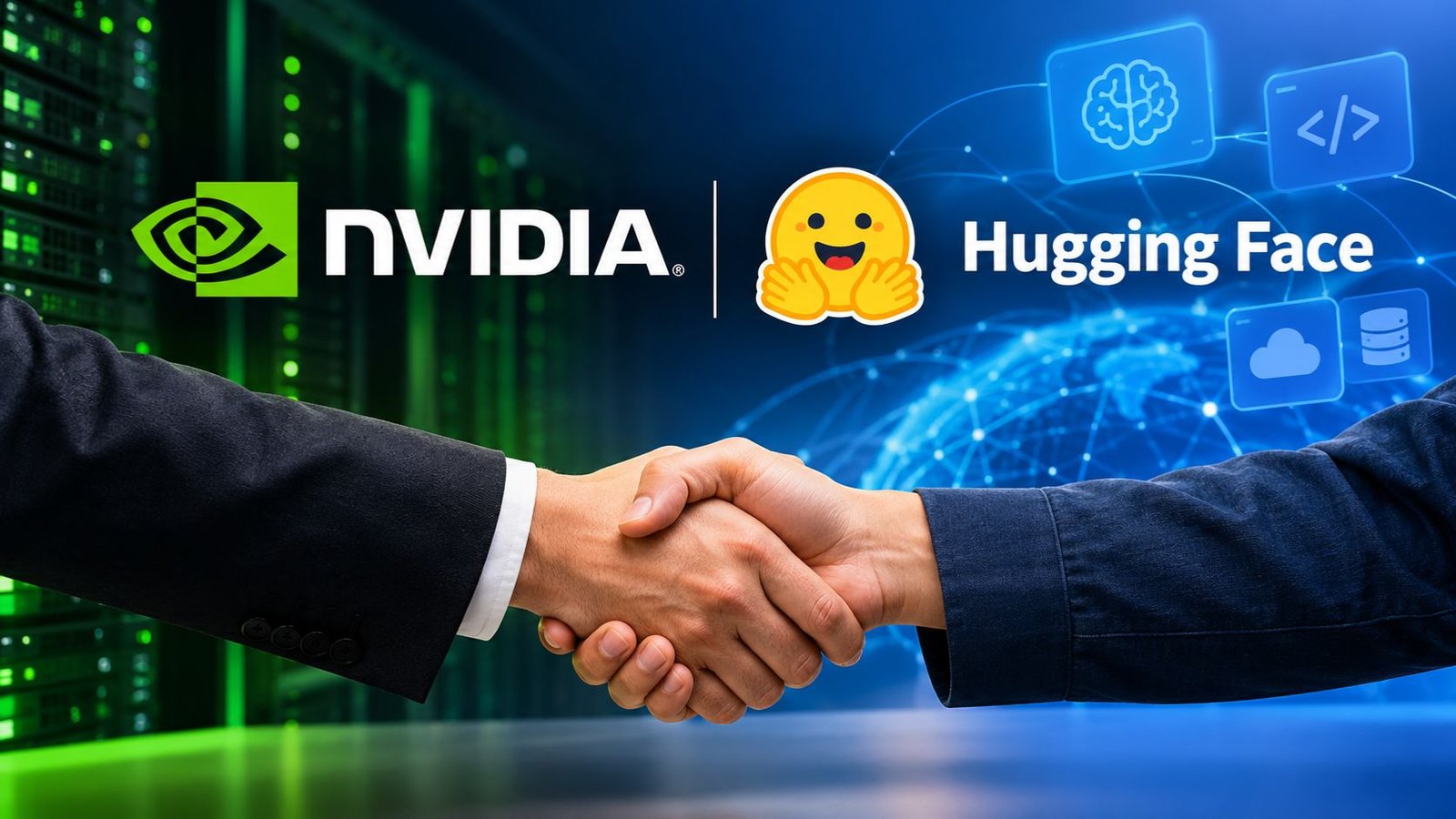
Nvidia has announced a $12.93 billion acquisition of Hugging Face, one of the world’s largest AI developer platforms and the home of millions of open AI models. The deal is one of Nvidia’s biggest acquisitions ever and signals the company’s ambition to expand far beyond AI chips into software infrastructure and developer tools.
The biggest reassurance for developers is that Hugging Face will remain an open platform. Nvidia says users will continue to publish, discover, and deploy AI models across different cloud providers and hardware platforms rather than being locked into Nvidia-only systems.
In this article, we’ll explain what Hugging Face is, why Nvidia made this massive investment, what changes for developers, and why this acquisition could reshape the future of open AI.
Nvidia’s $13 Billion Hugging Face Acquisition at a Glance
|
Detail |
Information |
|---|---|
|
Deal Value |
$12.93 billion |
|
Buyer |
Nvidia |
|
Company Acquired |
Hugging Face |
|
Founded |
2016 |
|
CEO |
Clément Delangue |
|
Developers Using Platform |
18+ million |
|
Companies Using Platform |
200,000+ |
|
Expected Closing |
First half of 2027 (subject to approvals) |
The transaction is expected to close in 2027, pending regulatory approvals, and includes plans to retain Hugging Face’s leadership and employees as part of the long-term integration strategy.
What Is Hugging Face?
If GitHub is where software developers share code, Hugging Face is often called the “GitHub for AI.”
Founded in 2016, the company originally started as a chatbot project before transforming into one of the world’s most important AI development platforms. Today, it allows researchers, startups, and enterprises to build, share, customize, and deploy AI models at scale.
The platform hosts:
-
Millions of AI models
-
Hundreds of thousands of datasets
-
AI applications through Spaces
-
Popular open-source libraries such as Transformers
Whether someone is building a chatbot, image generator, coding assistant, or language translation tool, there’s a good chance they’re using resources available on Hugging Face.
Why Millions of Developers Use Hugging Face
Hugging Face became successful because it lowered the barriers to AI development.
Instead of building everything from scratch, developers can:
-
Download pre-trained AI models.
-
Fine-tune models for specific tasks.
-
Share their own creations.
-
Collaborate with a global AI community.
-
Deploy models across multiple cloud providers.
That openness has helped the platform grow into one of the largest AI ecosystems in the world.
Why Nvidia Bought Hugging Face
At first glance, it might seem surprising that the world’s biggest AI chip company would spend nearly $13 billion on a software platform.
The strategy becomes clearer when looking at where the AI industry is heading.
Moving Beyond AI Chips
Nvidia already dominates the market for AI GPUs, but hardware alone isn’t enough anymore.
Developers increasingly need:
-
AI model repositories
-
Deployment tools
-
Cloud infrastructure
-
Collaboration platforms
By acquiring Hugging Face, Nvidia gains direct access to millions of AI developers while expanding deeper into the software layer of the AI ecosystem.
Strengthening Open AI
Another major motivation is Nvidia’s growing commitment to open-weight AI models.
Instead of relying entirely on proprietary AI systems, many organizations want models they can customize, inspect, and deploy themselves.
Hugging Face sits at the center of that movement.
Competing in a Changing AI Landscape
Large AI companies are increasingly building their own chips and AI infrastructure.
Owning Hugging Face helps Nvidia strengthen its relationship with developers regardless of which AI models they choose to build.
Rather than competing only on hardware, Nvidia is positioning itself as a company supporting the entire AI development pipeline.
Will Hugging Face Still Be Open Source?
This has become one of the biggest questions since the acquisition announcement.
The answer, according to Nvidia, is yes.
The company has publicly committed to keeping Hugging Face:
-
Open for developers
-
Multi-cloud
-
Multi-accelerator
-
Framework-independent
Developers won’t be forced to use Nvidia GPUs to publish or deploy models through Hugging Face.
What “Compute-Agnostic” Actually Means
Nvidia describes Hugging Face as remaining compute-agnostic.
In simple terms, developers can continue choosing:
-
Different cloud providers
-
Different AI frameworks
-
Different deployment options
-
Different hardware when appropriate
That promise is important because much of Hugging Face’s success has come from supporting an open developer ecosystem rather than a closed platform.
What Changes for Developers?
Most developers won’t notice immediate changes to their daily workflows.
However, several long-term benefits are expected.
Potential Benefits
-
Faster AI infrastructure
-
Improved model deployment tools
-
Better GPU integration
-
Expanded enterprise capabilities
-
Stronger platform investment
With Nvidia’s financial resources, Hugging Face may gain access to larger infrastructure investments that help the platform scale faster.
What Stays the Same
Nvidia says several core features will continue unchanged.
Developers can still:
-
Upload AI models.
-
Share datasets.
-
Use Transformers.
-
Collaborate through Spaces.
-
Build across multiple cloud environments.
That continuity is critical for the millions of developers already relying on the platform.
How This Changes the AI Industry
This acquisition isn’t just about one company buying another.
It reflects a larger shift happening across artificial intelligence.
For years, Nvidia became synonymous with AI hardware.
Now it’s becoming increasingly influential across:
-
AI software
-
Developer platforms
-
Model deployment
-
Enterprise AI infrastructure
That broader strategy gives Nvidia a stronger position as AI adoption continues growing across industries.
Why Open AI Models Matter More Than Ever
Open AI models have gained momentum because they offer several advantages.
Organizations often prefer them because they can:
-
Reduce costs.
-
Customize models.
-
Keep sensitive data under their own control.
-
Avoid dependence on a single AI provider.
Hugging Face has become the central marketplace for that growing ecosystem.
Potential Concerns About the Acquisition
Not everyone sees the deal without concerns.
Some analysts have raised questions about whether Nvidia could eventually favor its own hardware more heavily despite promising neutrality.
Other concerns include:
-
Market concentration in AI infrastructure.
-
Long-term competitive neutrality.
-
Regulatory oversight before the deal closes.
At the same time, Nvidia has repeatedly stated that Hugging Face will continue supporting multiple clouds, frameworks, and accelerators.
For now, those public commitments remain a key part of the acquisition strategy.
Nvidia’s Biggest Acquisitions Compared
The Hugging Face purchase ranks among Nvidia’s largest acquisitions ever.
|
Acquisition |
Approximate Value |
|---|---|
|
Groq Assets |
$20 billion |
|
Hugging Face |
$12.93 billion |
|
Mellanox |
$6.9 billion |
|
Cumulus Networks |
$0.7 billion |
The size of the investment highlights how valuable developer ecosystems have become in the AI era.
What Happens Next?
Here’s what to expect over the coming months.
September 2026
-
Nvidia officially announces the acquisition agreement.
-
Hugging Face confirms platform openness.
Next Steps
-
Regulatory reviews begin.
-
Employee retention plans move forward.
-
Integration planning continues.
First Half of 2027
-
Expected completion of the acquisition, subject to approvals.
The transition is expected to happen gradually rather than through immediate platform changes.
Frequently Asked Questions
Is Hugging Face still open source after Nvidia’s acquisition?
Yes. Nvidia has stated that Hugging Face will remain an open platform supporting multi-cloud and multi-accelerator development.
How much did Nvidia pay for Hugging Face?
The acquisition is valued at $12.93 billion, commonly rounded to $13 billion.
Why did Nvidia buy Hugging Face?
Nvidia wants to expand beyond AI chips into software infrastructure while strengthening its relationship with millions of AI developers.
Can developers still upload AI models?
Yes. Existing community features, including model uploads and dataset sharing, are expected to continue.
Will Hugging Face require Nvidia GPUs?
No. Nvidia says developers can continue using different hardware and cloud providers.
When will the acquisition close?
The transaction is expected to close in the first half of 2027, pending regulatory approvals.
Final Takeaway
Nvidia’s $12.93 billion acquisition of Hugging Face represents more than a blockbuster business deal—it marks a significant shift in how the AI industry is evolving. By combining the world’s leading AI chipmaker with one of the largest open AI developer communities, Nvidia is expanding its influence beyond hardware into the software platforms that millions of developers use every day.
The most important takeaway is that Hugging Face is expected to remain open, giving developers continued freedom to build, share, and deploy AI models across multiple clouds and hardware platforms. If those commitments hold after the deal closes in 2027, the acquisition could become one of the defining moments in the future of open AI.