Why You Can’t Straighten Your Arm After a Bicep Workout (And When to Worry)
You finished an intense arm session yesterday, and now you cannot fully extend your elbows. Your arms are stuck in a semi-bent position, and any attempt to straighten them produces a dull, pulling pain. It feels alarming, but in most cases, it is a normal physiological response to muscle damage.
Understanding why this happens, how long it lasts, and what you can do about it helps you manage the discomfort and know when professional attention might be needed.
What Causes the Inability to Straighten Your Arms
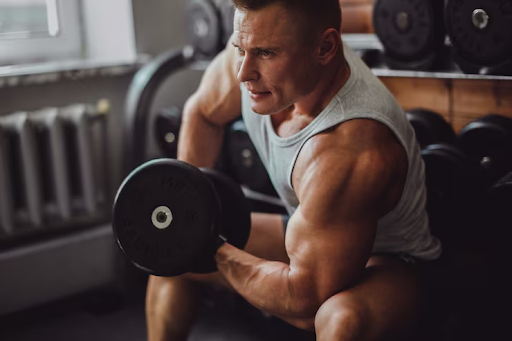
The medical term is delayed onset muscle soreness, commonly known as DOMS. When you perform eccentric contractions, the phase of a bicep curl where you lower the weight, microscopic tears occur in the muscle fibres. These tears trigger an inflammatory response that causes swelling, stiffness, and pain.
The swelling inside the bicep muscle makes it difficult to fully extend the elbow. Your body essentially shortens the muscle to protect it while repair is underway. This is why the stiffness typically peaks twenty-four to seventy-two hours after the workout, not immediately after.
Who Experiences This Most Often
If you can’t straighten arm after bicep workout, you are most likely in one of three situations. You are new to resistance training and your muscles are unaccustomed to the stress. You significantly increased the weight or volume of your bicep exercises. Or you performed a high number of eccentric-focused repetitions, such as slow negatives or preacher curls.
Experienced lifters can also experience this after returning from a break or dramatically changing their training programme.
How to Manage the Stiffness
- Gentle movement: Light, pain-free range-of-motion exercises encourage blood flow to the affected muscles and can reduce stiffness. Avoid forcing your arms straight.
- Heat therapy: A warm shower or heating pad applied to the biceps helps relax the muscle tissue and reduce tightness.
- Stay hydrated: Adequate water intake supports the body’s recovery and repair processes.
- Light stretching: Gentle, sustained stretches held for fifteen to twenty seconds can gradually restore range of motion. Do not bounce or force the stretch.
- Anti-inflammatory nutrition: Foods rich in omega-3 fatty acids, antioxidants, and protein support muscle repair and reduce inflammation.
How Long Does It Last
For most people, the stiffness resolves within three to five days. The peak discomfort usually occurs around the forty-eight-hour mark, then gradually subsides. Full range of motion typically returns by day four or five, though mild tenderness may linger slightly longer.
As your muscles adapt to the training stimulus, future sessions will produce progressively less soreness. This is known as the repeated bout effect.
When to Seek Medical Advice
While DOMS is harmless, certain symptoms warrant professional evaluation. If the pain is sharp rather than dull, if swelling is severe and accompanied by bruising, if your urine appears unusually dark, or if the stiffness does not improve after a week, consult a healthcare provider. These could indicate a muscle tear or, in rare cases, rhabdomyolysis, a serious condition involving excessive muscle breakdown.
Conclusion
Being unable to fully extend your arms after a bicep workout is uncomfortable but rarely dangerous. It is your body’s natural response to new or intense muscle stress. Managing it with gentle movement, hydration, and patience allows recovery to proceed normally. Over time, consistent training reduces the severity of this response, and your arms will adapt to handle progressively greater workloads.